
If you train hard, you compress hard. That’s just reality.
Whether you’re lifting heavy, running mileage, playing tennis, cycling, or doing CrossFit-style workouts, your spine absorbs load. Over time, that load shows up as tight hips, stiff lower back, compressed discs, and fatigue that doesn’t always disappear with stretching alone.
That’s where inversion therapy can fit into an athlete’s recovery plan. I’ve seen athletes use inversion two very different ways:
- As a smart decompression tool that supports mobility and recovery
- As a gimmick they overdo and end up regretting
The difference comes down to how you use it and what you expect from it. Let’s break it down.
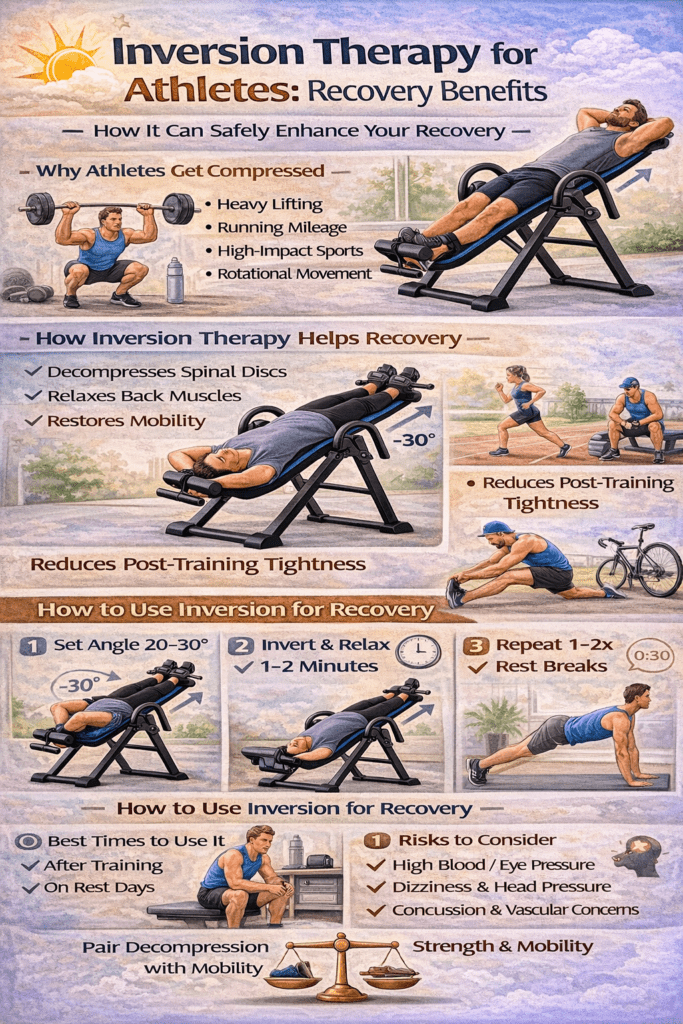
Why Athletes Get Compressed
When you train, especially with:
- Heavy squats or deadlifts
- Olympic lifting
- Long-distance running
- High-impact sports
- Rotational sports like golf or baseball
your spine experiences compressive forces. That compression:
- Temporarily reduces disc height
- Tightens paraspinal muscles
- Fatigues spinal stabilizers
- Creates that “shortened” feeling at the end of the day
Decompression strategies help counterbalance that load. That’s exactly what inversion therapy is designed to do.
How Inversion Therapy Supports Athletic Recovery
Inversion tables use gravity to gently stretch and decompress the spine. When you tilt back:
- Vertebral spacing may temporarily increase
- Muscles relax under traction
- Nerve pressure may reduce
- You feel less “jammed” in the lower back
This doesn’t magically rebuild discs. But it can create short-term space that improves movement quality during your next session.
If you’re new to inversion basics, this overview is helpful:
https://www.inversionexpert.com/inversion-table-benefits/
For athletes especially, decompression is less about “pain relief” and more about mobility restoration between sessions.
When Inversion Makes the Most Sense for Athletes
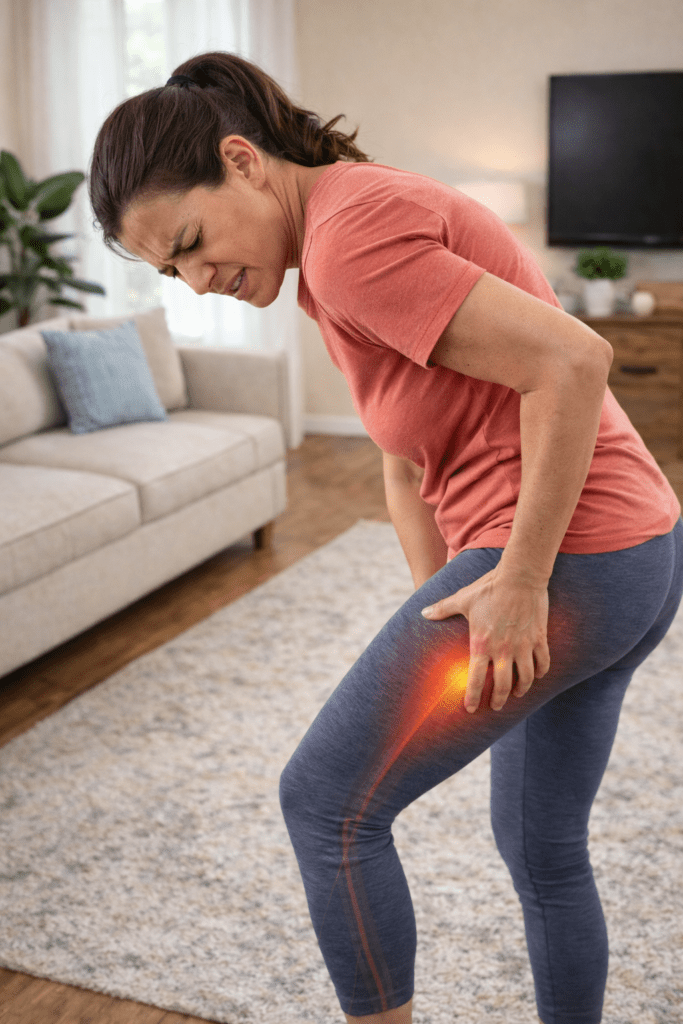
In my experience, inversion works best for athletes who:
- Feel compressed after heavy lifting
- Experience lumbar tightness after long runs
- Have stiff hips affecting squat depth
- Want a passive recovery tool between training days
For example:
- A powerlifter might use 3–4 minutes at 25–40° after heavy squat days.
- Runners might invert lightly in the evening to offset cumulative impact.
- An athlete recovering from intense training blocks may use inversion during deload weeks.
The key is using it strategically — not randomly.
What Inversion Does NOT Do for Athletes
Let’s be clear:
- Inversion does not build strength
- It does not replace mobility drills
- Hanging upside down does not fix structural injuries
- It does not improve performance directly
It creates an environment where recovery can improve. If your core is weak, inversion won’t fix it. If your hip mobility is limited, inversion won’t unlock it alone. Think of inversion as reducing spinal fatigue — not replacing training fundamentals.
Timing: Before or After Training?
Athletes often ask this.
After Training (Most Common)
This is typically safest and most effective. It helps decompress the spine after loading.
On Rest Days
Great for recovery blocks.
Before Training
Be careful. Mild inversion can help loosen the spine, but deep inversion immediately before maximal lifting may temporarily reduce spinal stiffness — and stiffness isn’t always bad for heavy lifts.
If you use inversion pre-training, keep angles mild and sessions short.
Choosing the Right Table for Athletes
Athletes need:
- Stable frame
- Smooth angle control
- Comfortable ankle locking
- Ability to hold moderate angles safely
The Innova ITX9600 is popular because of its sturdy base and simple angle control:
https://www.inversionexpert.com/innova-fitness-itx9600-good-or-bad/
For added comfort (especially after heavy leg days), some prefer enhanced ankle support like:
https://www.inversionexpert.com/innova-itm5900/
If you want something more premium and performance-focused:
https://www.inversionexpert.com/teeter-inversion-table/
Comfort matters because if your ankles hurt, you won’t use it consistently.
Trade-Offs and Risks for Athletes
Inversion changes circulation. That’s not trivial.
It temporarily:
- Raises blood pressure
- Increases eye pressure
- Shifts blood toward the head
- May cause dizziness
Athletes with:
- Hypertension
- Concussion history
- Eye pressure issues
- Cardiovascular concerns
should consult a healthcare provider before adding inversion.
Also, aggressive full inversion (90°) isn’t necessary for recovery. Many athletes get excellent results at 20–45°.
Overdoing inversion can:
- Trigger headaches
- Cause dizziness
- Irritate sensitive discs
More angle doesn’t equal better recovery.
Realistic Recovery Expectations
Here’s what athletes can realistically expect:
Short-Term
- Feeling “lighter” in the spine
- Reduced lower back tightness
- Improved post-session mobility
- Better extension and rotation
Long-Term (With Consistency)
- Less cumulative spinal fatigue
- Easier mobility work
- Reduced compression-related soreness
But inversion won’t:
- Prevent injury alone
- Replace recovery sleep
- Replace strength balance work
It supports recovery — it doesn’t replace it.
How to Use Inversion for Athletic Recovery
A simple protocol I recommend:
- Invert at 20–30° for 2 minutes
- Slowly return upright
- Rest 30 seconds
- Repeat 1–2 times
- Follow with light mobility drills
Avoid staying inverted longer than 5 minutes at a time unless you’ve built tolerance gradually.
Slow, controlled sessions outperform aggressive hanging.
Frequently Asked Questions
Does inversion improve performance?
Indirectly, it may improve mobility and reduce fatigue, but it doesn’t directly increase strength or speed.
Is full inversion necessary?
No, most athletes benefit at partial angles.
Can inversion help with post-lift back tightness?
Yes, it can temporarily decompress and relax fatigued spinal muscles.
Should I invert every day?
Some athletes do during intense blocks. Others use it only after heavy sessions – listen to your body.
Is inversion safe for contact sport athletes?
Generally yes if healthy, but those with concussion or vascular history should consult a professional first.
Reputable Resources for More Information
- Cleveland Clinic – Inversion therapy overview and risks
- Mayo Clinic – Back pain and recovery guidance
- American College of Sports Medicine – Recovery and overuse recommendations
- WebMD – Spinal traction safety
Conclusion: Recovery Tool, Not Magic Trick
For athletes, inversion therapy can be a powerful decompression strategy — especially during heavy training cycles. It helps reduce spinal fatigue, supports mobility and can enhance recovery.
But it doesn’t replace strength work, sleep, nutrition, or smart programming. If you use it with intention — mild angles, controlled sessions, paired with mobility work — it becomes a strong addition to your recovery toolbox.