
If you’re a runner, you already know the routine: tight calves, stiff hamstrings, cranky hips, and that subtle lower back compression that creeps in after long miles. Over time, especially if you’re stacking weekly mileage or training for races, your body starts to feel “shortened.” That’s where inversion tables enter the conversation.
But are they actually worth it for runners?
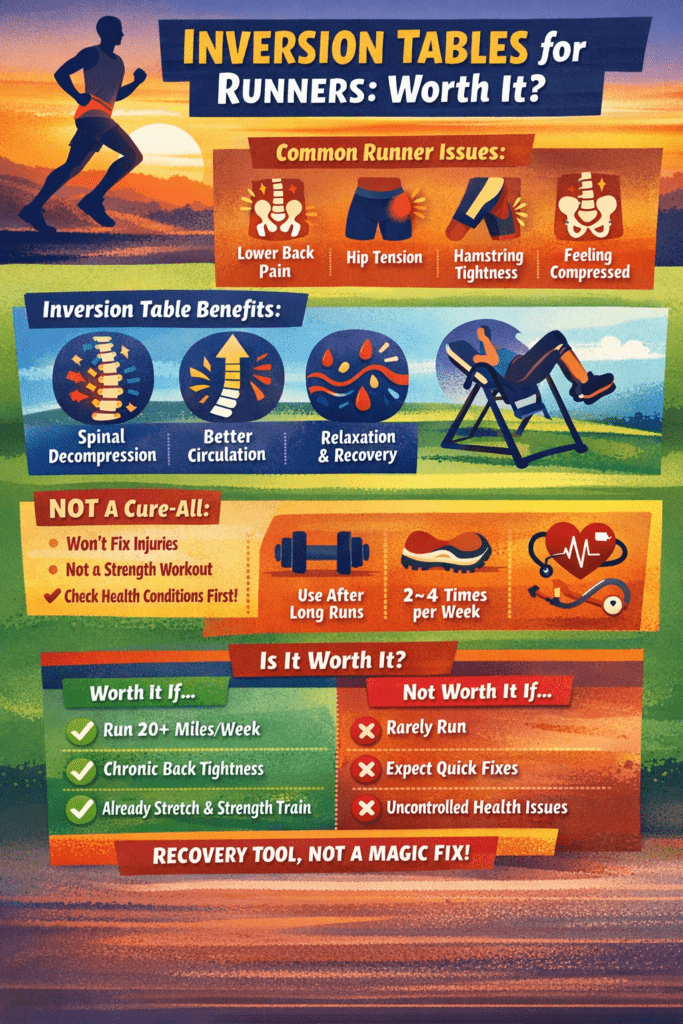
I’ve worked with plenty of endurance athletes who were skeptical at first. Most runners are disciplined but practical — they’ll foam roll, stretch, maybe use a massage gun. But hanging upside down? That sounds extreme. The truth is, when used correctly, inversion can be a powerful recovery tool — but it’s not magic, and it’s not for everyone.
Let’s break it down.
Why Runners Even Consider Inversion
Running is repetitive impact. Even with good form, every stride compresses the spine and loads the hips. Over thousands of steps, that adds up.
Here’s what runners usually complain about:
- Lower back tightness after long runs
- Hip flexor stiffness
- Sciatic irritation
- Hamstring tightness that never fully resolves
- Feeling “compressed” after speed workouts
Inversion therapy gently decompresses the spine using your own body weight. Instead of pushing or forcing movement, gravity does the work. This decompression can temporarily relieve pressure on spinal discs and surrounding nerves.
If you’re unfamiliar with how inversion works mechanically, I recommend reading the guide on how inversion tables work. It breaks down the physics in plain English.

The Real Benefits for Runners
Let’s stay grounded here. Inversion won’t turn you into a faster runner overnight. But here’s what it can realistically help with:
1. Spinal Decompression
Long-distance running compresses spinal discs. Inversion can temporarily create space between vertebrae, which may:
- Reduce nerve irritation
- Ease post-run stiffness
- Improve mobility
Many runners report feeling “looser” afterward — not because muscles stretched dramatically, but because the spine isn’t compressed.
2. Improved Circulation
When inverted, blood flow shifts. This may help with recovery by:
- Reducing lower-leg pooling
- Supporting lymphatic drainage
- Helping tired legs feel refreshed
It’s not a replacement for proper recovery, but it can complement it.
3. Relaxation Response
One benefit runners often underestimate is nervous system reset. Hanging inverted for a few minutes forces you to slow down. Deep breathing while inverted can reduce sympathetic (stress) dominance — which matters if you’re training hard.
What It Will NOT Do
This is important.
An inversion table will NOT:
- Replace strength training
- Fix poor running form
- Heal structural injuries
- Cure chronic disc damage
- Replace proper mobility work
Think of inversion as a recovery tool — not a primary solution.
Trade-Offs and Risks
This is where you need to be honest with yourself.
Inversion increases blood pressure in the head and upper body temporarily. That means it is NOT recommended for people with:
- Uncontrolled high blood pressure
- Glaucoma
- Retinal issues
- Heart disease
- Hernias
If you have any medical conditions, clear it with your doctor first.
There’s also the reality that some runners simply don’t enjoy being upside down. If you hate the feeling, you won’t use it consistently — and consistency is what creates benefit.
For a deeper dive into safety considerations, check the page on inversion therapy risks and safety tips.
Manual vs Motorized for Runners
Most runners don’t need a high-end motorized table. A solid manual table works extremely well.
If you’re unsure about the difference, read motorized vs manual inversion tables. In short:
- Manual tables = affordable, reliable, more control
- Motorized tables = easier for people with limited mobility
For runners in good shape, manual is usually perfect.
How Runners Should Use an Inversion Table
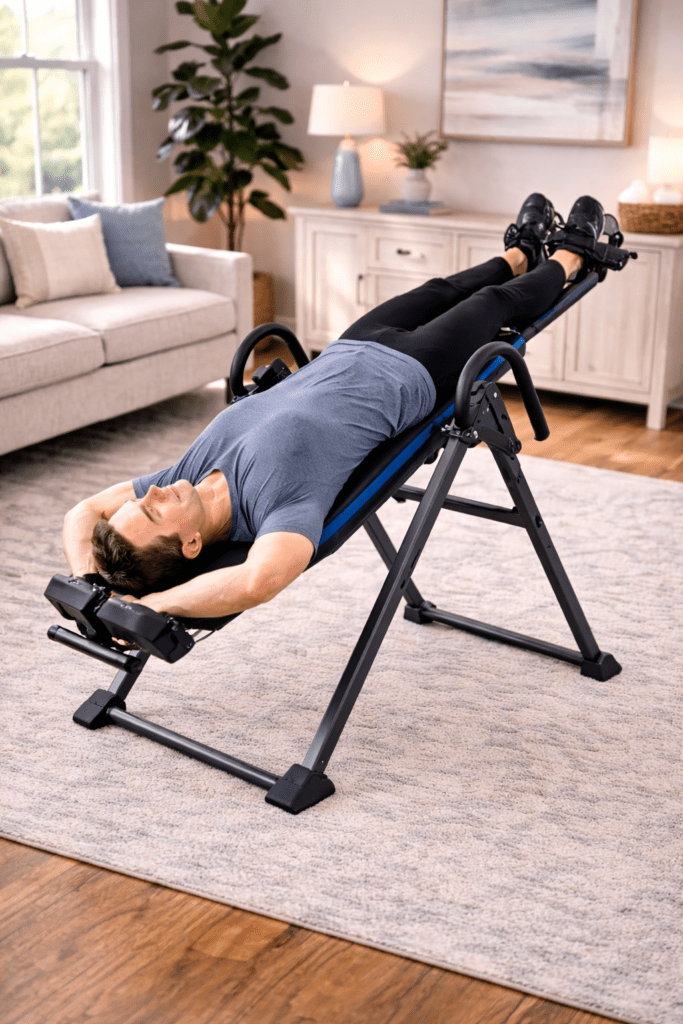
If you buy one and jump straight to full 90-degree inversion, you’re doing it wrong.
Start here:
Week 1
- 20–30 degree incline
- 1–2 minutes
- Focus on slow breathing
Week 2–3
- Increase to 45 degrees
- 3–5 minutes max
Full inversion isn’t necessary for benefits.
Best timing for runners:
- After long runs
- After speed sessions
- On rest days for recovery
Never invert immediately before a hard workout.
Is It Worth It? The Honest Answer
Here’s how I frame it for runners:
If you’re:
- Running 20+ miles per week
- Dealing with chronic spinal compression or stiffness
- Already doing mobility and strength work
- Looking for recovery edge
Then yes — it can be worth it.
If you:
- Rarely run
- Avoid stretching
- Expect it to “fix” injuries
- Have uncontrolled health issues
Then no — fix the fundamentals first.
Frequently Asked Questions
Do inversion tables make you taller?
Temporarily, yes — by decompressing the spine. Permanently, no.
Can inversion improve running performance?
Indirectly. If it reduces stiffness and improves recovery, you may train more comfortably. But it’s not a performance shortcut.
How often should runners use inversion?
2–4 times per week is plenty. Overuse can irritate sensitive structures.
Is inversion better than foam rolling?
They do different things. Foam rolling targets muscle tissue. Inversion decompresses the spine. They complement each other.
Should I use inversion before or after running?
After. Using it before intense activity may temporarily reduce stability.
Realistic Expectations
Here’s what you’ll likely notice:
- Reduced lower back tightness
- A decompressed feeling
- Better post-run recovery sensation
Here’s what you probably won’t notice:
- Dramatic speed gains
- Massive flexibility improvements
- Instant pain cures
Inversion is a subtle tool. Its power comes from consistent, moderate use — not intensity.
Reputable Resources
If you want research-backed information:
- Mayo Clinic – Inversion Therapy Overview
- Cleveland Clinic – Back Pain and Spinal Decompression
- National Institute of Neurological Disorders and Stroke (NINDS)
Final Verdict
For serious runners who prioritize recovery, an inversion table can absolutely be a useful addition. It won’t replace mobility work, strength training, or smart programming — but it can reduce spinal compression and help you feel less beat up.
If your lower back gets cranky after long runs, and you’re already doing the basics right, this might be the recovery tool that keeps you consistent.
And for runners, consistency is everything.