
If you’re new to inversion tables, the first thing you learn is this: the “best” table isn’t the one with the most features — it’s the one you’ll actually feel safe using.
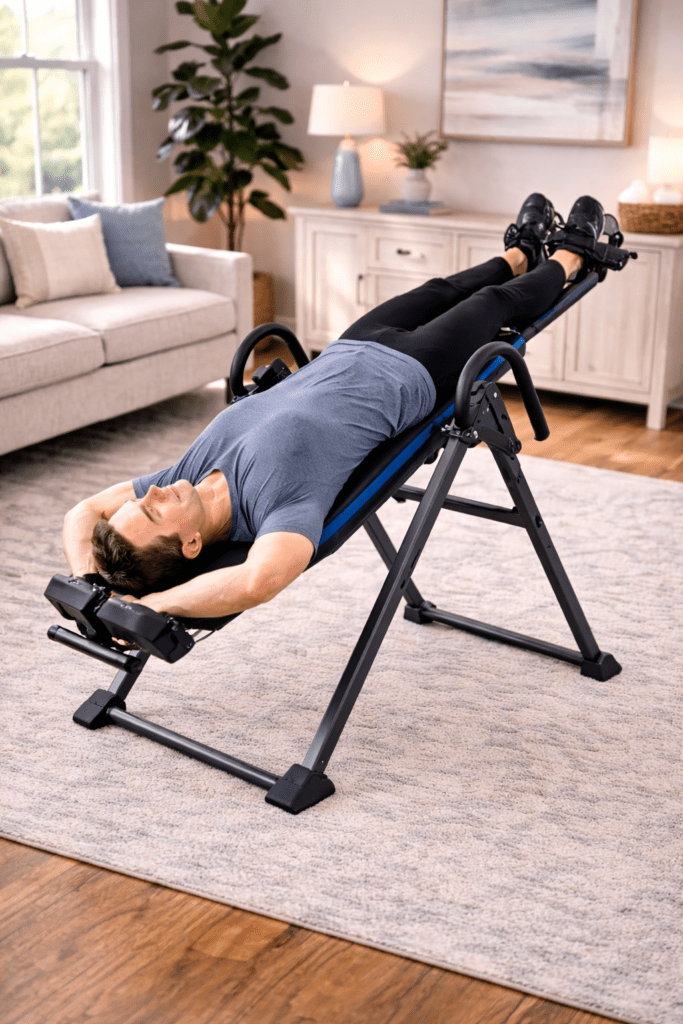
I’ve seen beginners buy a heavy-duty “pro” model because it sounded impressive… then avoid it because it felt intimidating, hard to control, or rough on the ankles. I’ve also seen people buy the cheapest option and regret it because it wobbled, pinched, or felt sketchy at even mild angles.
For beginners, the goal is simple: smooth control, comfort at the ankles, and predictable safety. If you get those three things right, you’ll use it consistently — and that’s where the benefits happen.
Let’s walk through what to look for, what to avoid, and the “best” beginner options (as categories/features) so you can buy confidently.
What Beginners Should Prioritize
1) Stability First (No Wobble, No Drama)
A beginner table should feel planted and solid. Look for:
- Wide base footprint
- Thick steel frame (not flimsy tube construction)
- Non-slip feet
- A weight capacity that gives you a buffer (don’t buy “just enough”)
If you step onto it and it shifts or squeaks a lot, you’ll tense up — and inversion doesn’t work well when your body is braced and anxious.
2) Easy Angle Control (You Don’t Need 90°)
The biggest beginner mistake is thinking full inversion is required. It isn’t.
A great beginner table makes it easy to use 20–45 degrees comfortably. That range is where most people get the “decompressed” feeling without the head pressure or ankle load that comes with steep angles.
3) Comfortable, Adjustable Ankle Locks
Ankle discomfort is the #1 reason beginners quit.
Look for:
- Thick ankle pads
- Adjustable ankle lock positions
- Smooth locking mechanism that doesn’t “bite”
- A setup that works well with athletic shoes
If ankles are a concern for you (or you’ve had past sprains), read How to Avoid Ankle Pain While Using an Inversion Table before you buy. It’ll save you a lot of frustration.
4) A Real Safety Strap or Angle Limiter
This is non-negotiable for beginners.
You want a table that includes a strap/limiter that physically prevents you from going past your chosen angle. It’s a confidence booster and a safety feature.
5) Easy Height Adjustment That Actually Makes Sense
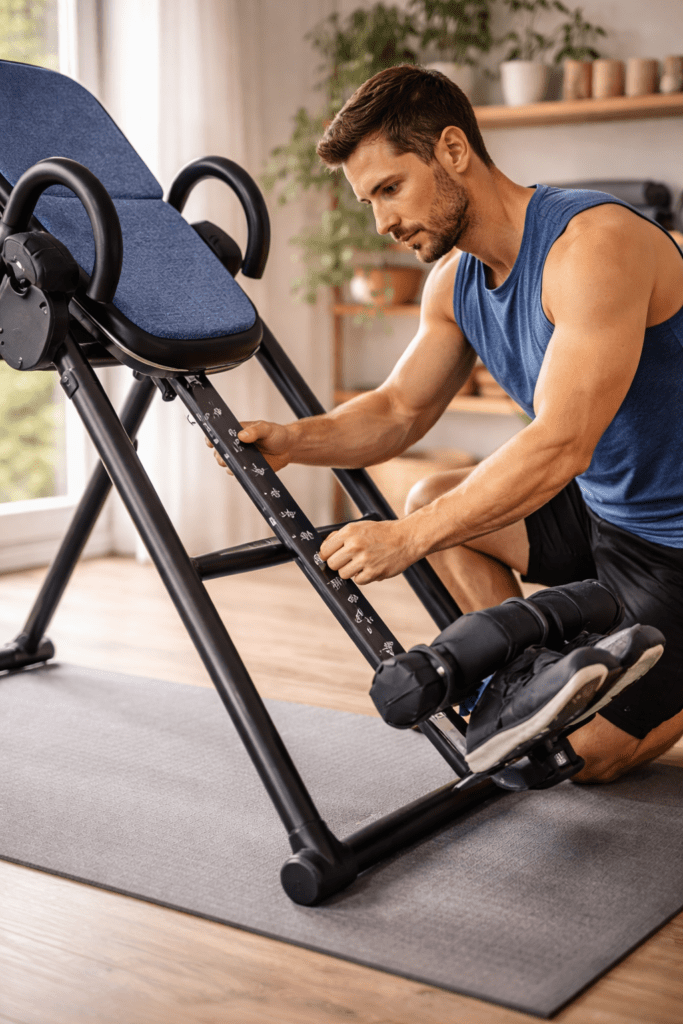
Beginners struggle with the height setting because they don’t realize it affects balance and ankle pressure.
The best tables have:
- Clear height markings
- Easy adjustment (not a 10-minute wrench project)
- A secure locking pin system
If height adjustment is off, you’ll feel like you’re “hanging” on your ankles instead of rotating smoothly.
The “Best” Beginner Inversion Tables: What to Choose
Instead of naming models that change year-to-year, here are the beginner-friendly types that consistently work well.
Sunny Health & Fitness Inversion Traction Table
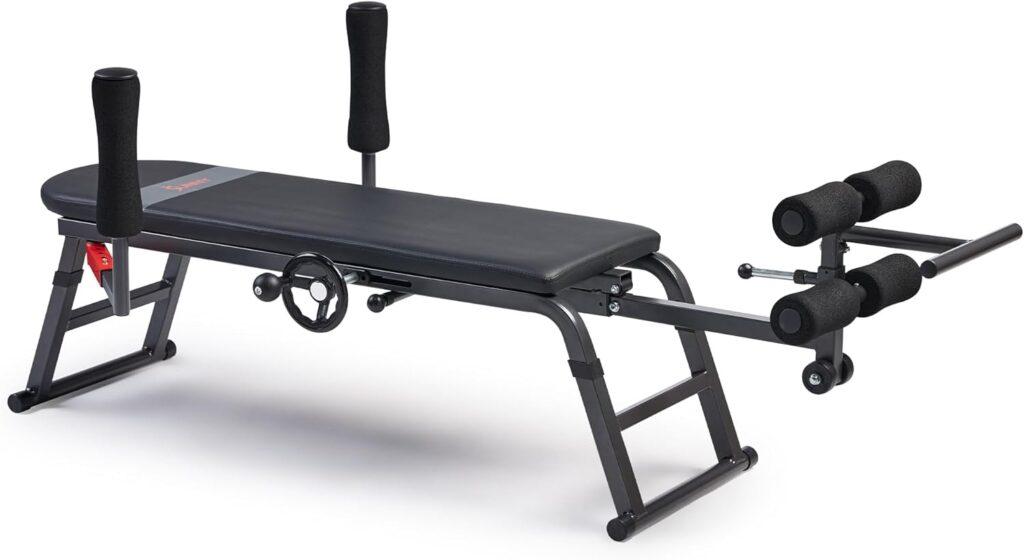
- Comfortable padded design with high-density foam supports your back and ankles during gentle inversion — helpful if you’re just learning traction.
- Adjustable height and angle make it easy to start at mild inclines (20°–45°) and progress safely.
- Built with a stable frame and traction handles, giving beginners more control as they invert.
- Great choice if your focus is simple decompression and posture improvement.
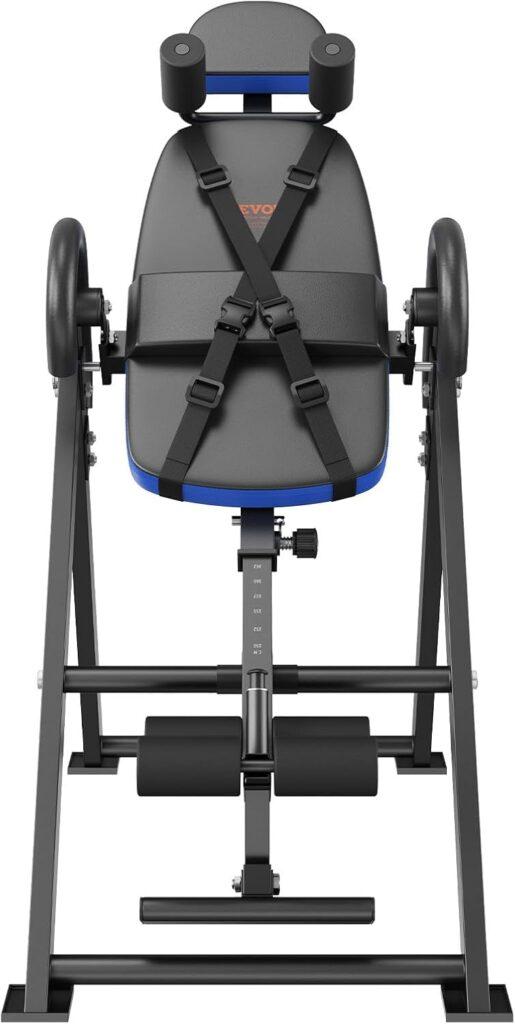
Vevor Foldable Inversion Table
- Excellent value pick with solid build quality and foldable design — ideal if space or budget is a concern.
- Adjustable features let you set safe inversion angles that won’t overwhelm you as a beginner.
- Foam ankle rests help reduce pressure on your lower legs.
- The foldable frame makes it easy to store between sessions, which is great for home use.
Innova ITM4800 Advanced Heat and Massage Inversion Table
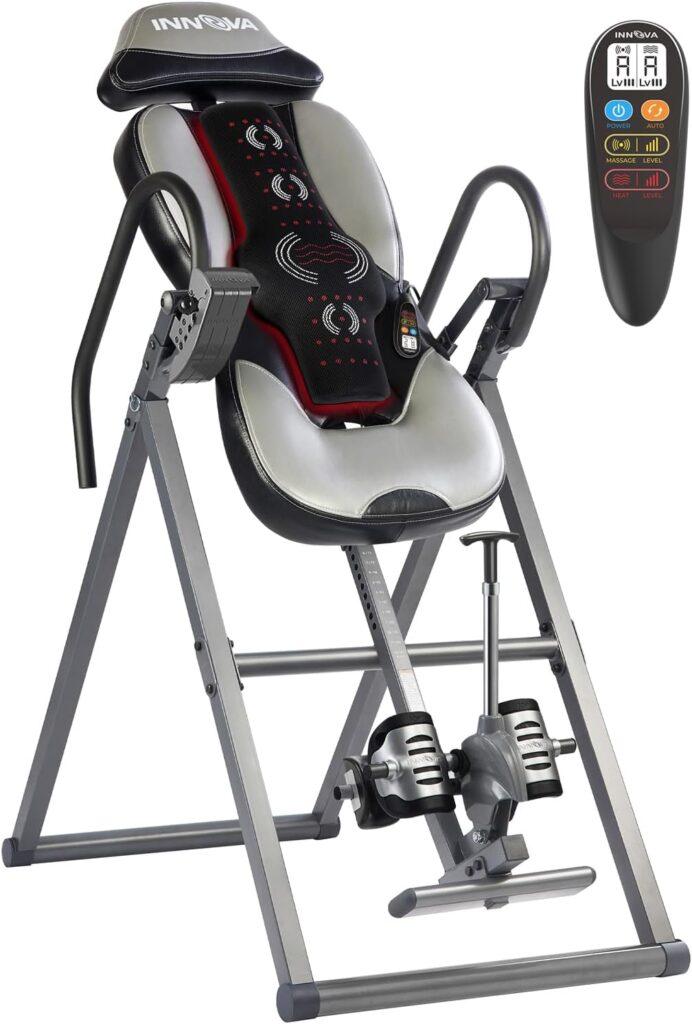
- Includes heat and vibration massage for a more comfortable, therapeutic inversion experience.
- True Balance System lets you fine-tune the center of gravity for smooth, controlled tilting.
- Six-angle adjustable pin system (with protective cover) lets beginners find a comfortable start angle that they can grow with.
- Large foam backrest and ergonomic ankle holders improve comfort, especially on initial sessions.
- Why it’s good for beginners: Offers a good balance of therapeutic comfort and safety-focused design that helps new users ease into inversion therapy.
Option A: Best Overall for Most Beginners
Standard full-size inversion table with:
- sturdy frame
- comfortable ankle locks
- angle limiter strap
- medium-to-large backrest
This is the sweet spot for most people. It’s comfortable, predictable, and easy to learn. Who it’s for: most beginners with mild to moderate back tightness who want safe decompression.
Option B: Best for Ankle-Sensitive Beginners
Table with upgraded ankle system and thicker padding
- larger ankle cups/pads
- more adjustment positions
- smoother lock action
If your ankles are already cranky, pay for comfort here. You can “tough it out” with a cheaper ankle lock, but you’ll hate every session.
Option C: Best for Nervous Beginners
Table with extra-stable base + easy angle control
- wider stance
- stable pivot action
- grippy handles
- conservative angle limiter
This is about confidence. The easier it is to control, the faster you build comfort.
Option D: Best if Mobility Is Limited
Motorized or assisted-return table (or a table with ultra-easy return)
Motorized isn’t “better” for results — it’s better for usability if you have issues getting back upright, or you simply don’t want to fight the balance point.
If you’re deciding between styles, check Motorized vs Manual Inversion Tables.
Trade-Offs and Risks (Beginner Edition)
A beginner should know two kinds of risks: medical and user-error.
Medical cautions (don’t skip this)
Inversion temporarily increases pressure in the head/upper body. It’s typically not recommended if you have:
- uncontrolled high blood pressure
- glaucoma or certain eye conditions
- significant heart disease
- recent stroke history
- retinal problems
If you have any medical uncertainty, clear it with your clinician before using one.
User-error risks (the common stuff)
- Going too steep too fast
- Staying inverted too long
- Locking ankles too tight
- Standing up too quickly afterward
A beginner table should reduce these risks with good angle limiting and ankle comfort — but you still need to use it smartly.
For time guidance, see How Long Should You Stay Upside Down?
Realistic Expectations (What You’ll Actually Feel)
What most beginners notice quickly:
- less “compressed” feeling after sitting
- temporary lower-back relief
- muscle relaxation around the spine
- improved mobility after a session
What beginners often expect (but shouldn’t):
- permanent fixes after one week
- curing structural spine issues
- replacing strengthening/mobility work
Inversion is a recovery and decompression tool, not a replacement for core strength, hip mobility, walking, and basic movement habits.
Quick Beginner Buying Checklist
Before you buy, make sure it has:
- ✅ Angle limiter strap (or similar)
- ✅ Thick, adjustable ankle pads
- ✅ Stable wide base
- ✅ Easy height adjustment
- ✅ Comfortable backrest
- ✅ Weight capacity buffer (don’t cut it close)
- ✅ Clear return-to-upright control (handles help)
If a table is missing two or more of those, keep shopping.
Frequently Asked Questions
Do beginners need full inversion?
No. Most beginners do best at 20–45 degrees.
How long should a beginner invert?
Start with 1–2 minutes, build up to 3–5 minutes. Longer isn’t better.
Are more expensive tables always better?
Not always. Pay for stability and ankle comfort first. Fancy extras come second.
Should I wear shoes?
Usually yes — athletic shoes often reduce ankle pressure and pinching.
Is inversion better than stretching?
It’s different. Stretching targets muscles. Inversion targets spinal decompression. They can work well together.
Reputable Resources for More Information
- Mayo Clinic (back pain overview and general treatment guidance)
- Cleveland Clinic (back pain causes and conservative care options)
- NIAMS – National Institute of Arthritis and Musculoskeletal and Skin Diseases (spine/joint education)
Conclusion
The best inversion table for beginners is the one that feels stable, comfortable at the ankles, and easy to control at mild angles. If you buy for confidence and consistency (not bragging rights), you’ll actually use it — and that’s where the payoff is.