
If you’re dealing with back pain, you’ve probably heard two very different recommendations:
“Try an inversion table.”
“Start doing yoga.”
Both can help. Both have limitations. And neither is a magic cure.
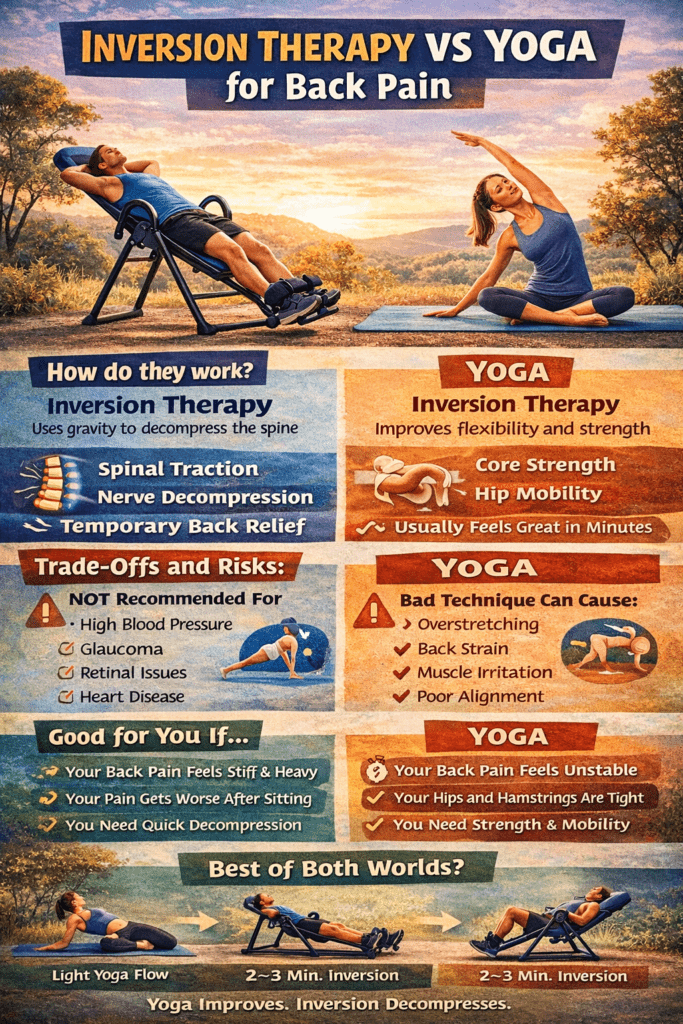
I’ve worked with people who swear by yoga, and others who get immediate relief from inversion therapy. The truth? They work in completely different ways — and knowing that difference is what helps you choose wisely.
Let’s break it down.
How Inversion Therapy Works
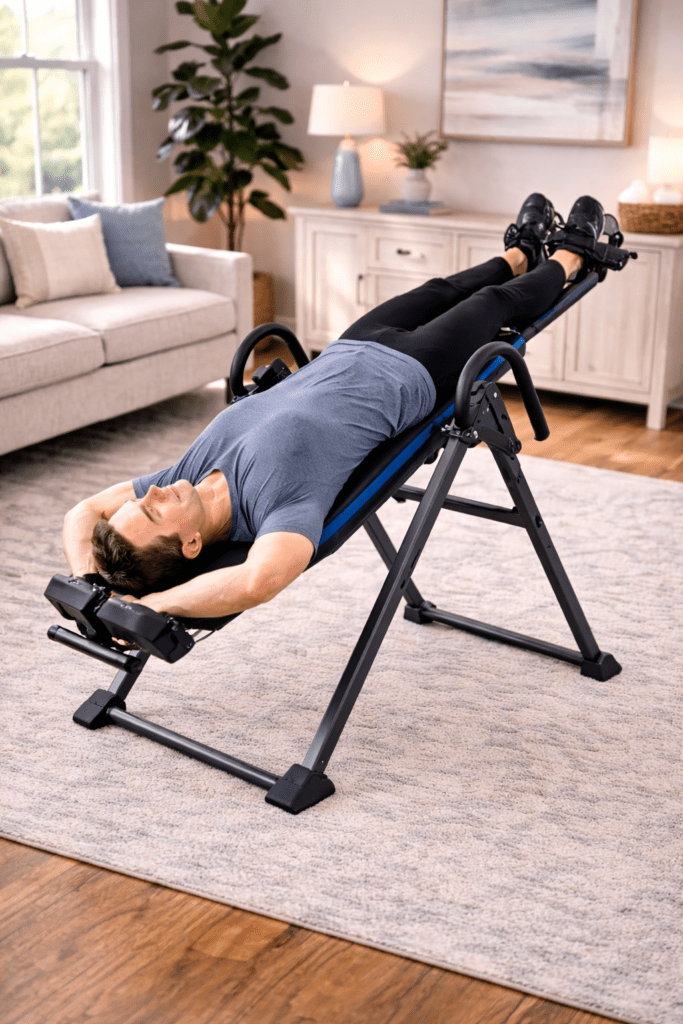
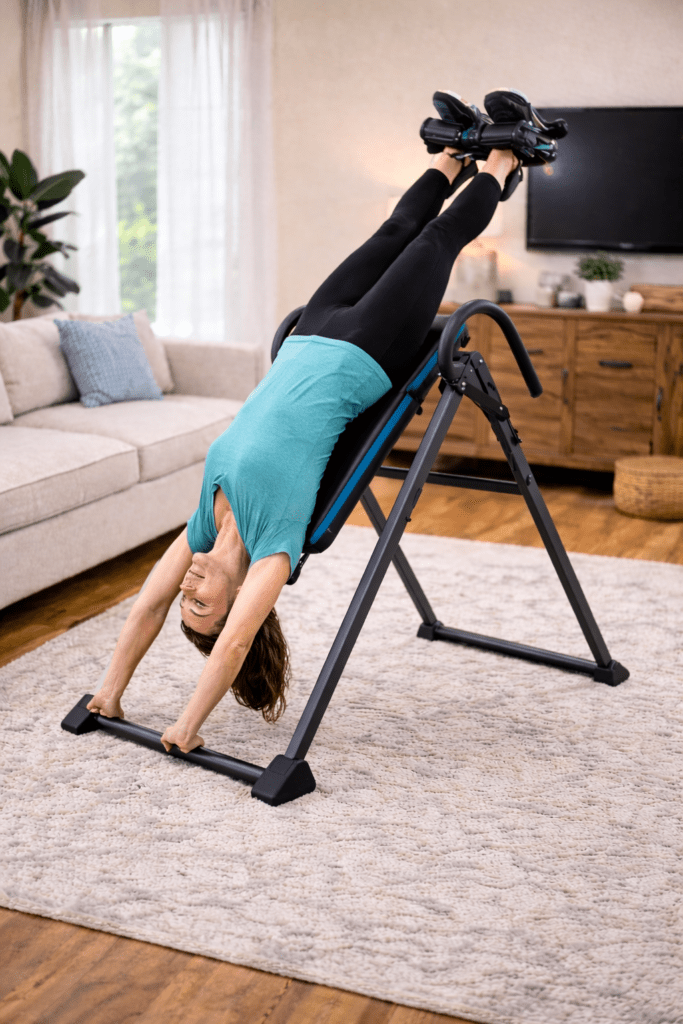
Inversion therapy uses gravity to gently decompress the spine. When you tilt backward on an inversion table, your body weight creates traction between vertebrae.
What that can do:
- Temporarily increase space between vertebrae
- Reduce nerve pressure
- Relax tight spinal muscles
- Decrease compression after long periods of sitting or standing
If you want a full mechanical explanation, the article on how inversion tables work walks through the anatomy in detail. The key word here is decompression.
Inversion is passive. You don’t stretch. You don’t engage muscles. Gravity does the work. For people whose pain is driven by spinal compression (sitting all day, heavy lifting, long-distance running), inversion can feel like immediate relief.

How Yoga Works for Back Pain
Yoga is active. Instead of decompression through gravity alone, yoga improves:
- Flexibility
- Core strength
- Hip mobility
- Postural control
- Breathing mechanics
Back pain often isn’t just compression. It’s weakness, tight hips, poor posture, and movement imbalances. Yoga addresses those root causes over time.
But here’s the difference: yoga requires effort and consistency. Results tend to be gradual rather than instant.
Immediate Relief vs Long-Term Adaptation
Here’s the big distinction:
Inversion = Fast relief.
Yoga = Long-term structural improvement.
Inversion can make you feel better in 2–5 minutes. Yoga may take weeks to build noticeable changes in strength and mobility. If you’re looking for quick decompression after a long workday, inversion wins. However, if you’re trying to correct posture and strengthen your core, yoga wins.
Trade-Offs and Risks
Inversion Therapy Risks
Inversion increases blood pressure in the upper body temporarily. It is not recommended for people with:
- Uncontrolled high blood pressure
- Glaucoma
- Heart disease
- Retinal issues
- Recent stroke history
You also need to start slowly. The guide on inversion benefits and risks covers contraindications clearly. It’s powerful, but it’s not for everyone.
Yoga Risks
Yoga looks gentle — but poor technique can irritate the back. Common mistakes include:
- Overstretching hamstrings
- Forcing spinal flexion
- Collapsing into lumbar extension
- Ignoring core engagement
Certain poses (deep forward folds, aggressive twists) can worsen disc-related pain if done incorrectly. The solution? Start slow. Avoid extreme ranges early on. Focus on alignment.
Who Benefits Most From Each?
Inversion May Be Better If:
- Your pain worsens after sitting
- You feel compressed or stiff
- You respond well to traction
- You want quick relief
Yoga May Be Better If:
- Your core is weak
- You have tight hips and hamstrings
- You struggle with posture
- You’re willing to build long-term habits
If you’re unsure whether inversion alone is enough, reading about how long to stay upside down safely can help you understand how to use it properly.
Can You Combine Both?
This is where it gets interesting. For many people, the best results come from combining inversion and yoga.
Example routine:
- Light yoga flow (10–15 minutes)
- Core activation
- Finish with 2–3 minutes of gentle inversion
Yoga prepares the body. Inversion decompresses afterward. That combination addresses both compression and weakness.
Realistic Expectations
Neither inversion nor yoga:
- Permanently “fixes” spinal degeneration
- Instantly cures herniated discs
- Replaces medical care when needed
Back pain is multifactorial.
What they can do:
- Reduce tension
- Improve mobility
- Decrease nerve irritation
- Improve daily comfort
Consistency matters more than intensity.
What I Tell Most People
If your back pain feels like pressure, heaviness, or stiffness at the end of the day — start with inversion.
On the other hand, if your pain feels unstable, weak, or posture-related — start with yoga. And if you want the best of both worlds — use both strategically. Just don’t expect dramatic change without consistency.
Frequently Asked Questions
Is inversion better than yoga for sciatica?
If sciatica is caused by compression, inversion may provide relief. If it’s caused by instability or weakness, yoga may help more.
Can yoga replace inversion therapy?
Not exactly. Yoga improves strength and mobility, but it doesn’t provide passive spinal traction like inversion.
Is inversion safer than yoga?
Both are safe when done correctly. Both have contraindications. Medical clearance is important if you have health conditions.
How often should I practice yoga for back pain?
2–4 times per week is a solid starting point.
How often should I invert?
2–4 times per week for 1–5 minutes per session is sufficient for most people.
Reputable Resources
For balanced medical perspectives:
- Mayo Clinic – Back Pain Treatment Overview
- Cleveland Clinic – Causes of Chronic Back Pain
- National Institute of Neurological Disorders and Stroke (NINDS)
These sources provide evidence-based information on spinal health.
Final Thoughts
Inversion therapy and yoga aren’t competitors. They’re tools.
- Inversion is a mechanical decompression strategy.
- Yoga is a movement-based correction strategy.
If you understand what your back actually needs — pressure relief, strength, mobility, or all three — you can choose intelligently. Don’t chase trends or expect miracles.
Build strength, improve mobility, and decompress strategically. Your spine responds best to smart, consistent care — not extremes.