
This is one of the most common questions I get: “Okay… I’m on the inversion table. Now how long do I stay here?”
And I get it. Hanging upside down feels intense at first. Some people assume longer is better. Others panic after 30 seconds and jump off.
The truth is simple: more time does not equal more benefit. In fact, staying inverted too long can backfire. Let’s break this down so you know exactly what to do — and what not to do.
The Short Answer
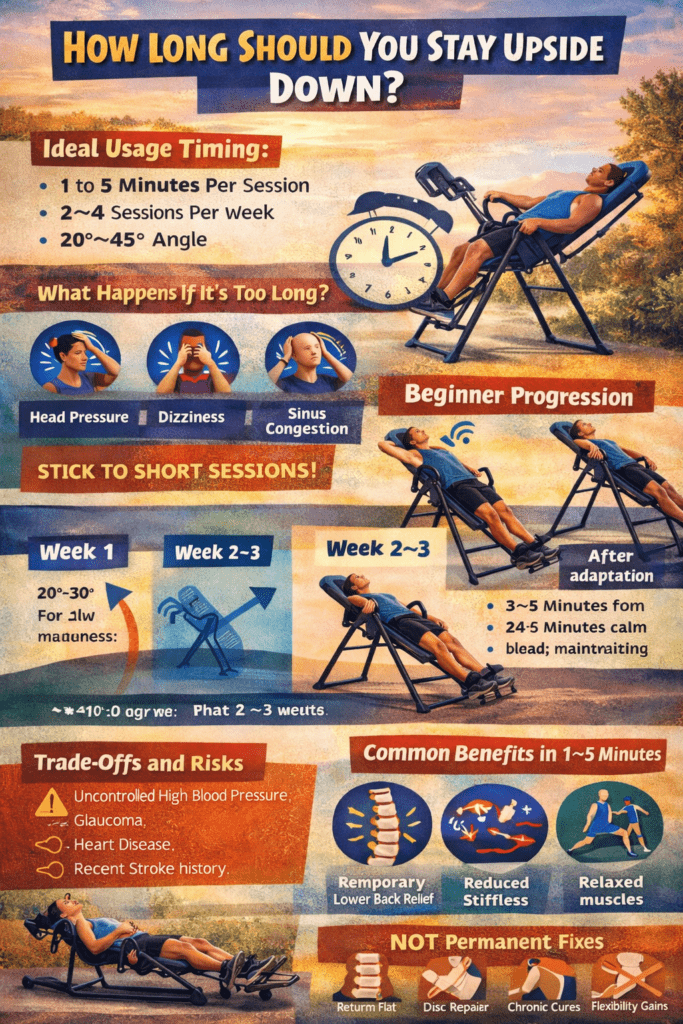
For most healthy adults:
- 1 to 5 minutes per session
- 2–4 times per week
- Start at a shallow angle (20–30 degrees)
That’s it.
If you’re new, even 60–90 seconds is enough to begin.
Why Short Sessions Work Best
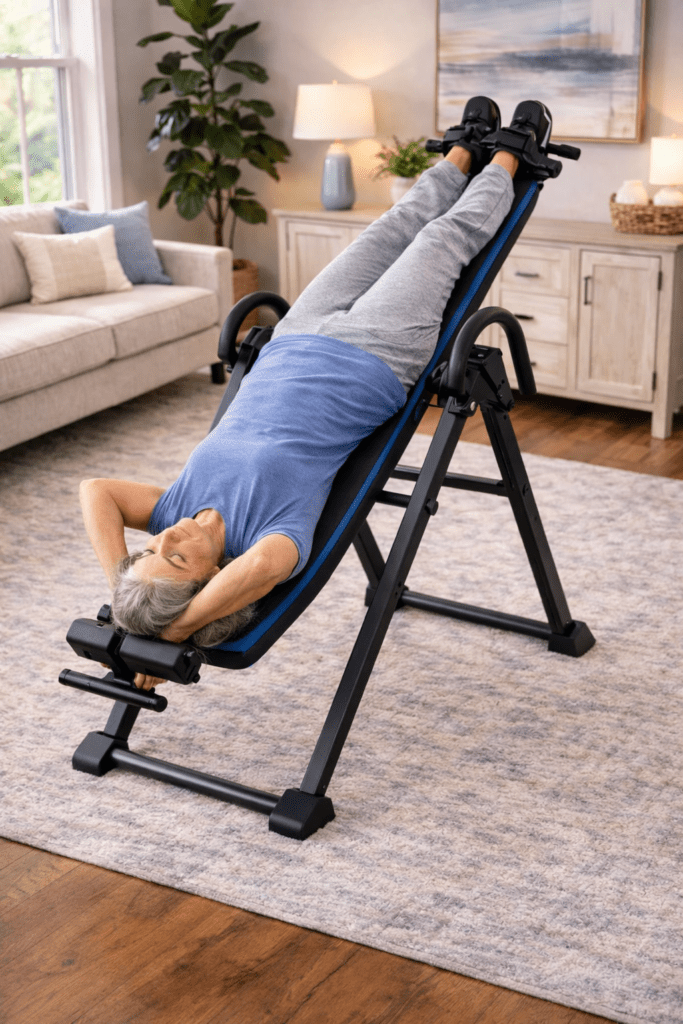
Inversion works through gravity-assisted traction. When you tilt back, your body weight gently decompresses the spine. That decompression happens quickly.
Within the first minute:
- Spinal discs begin to experience reduced pressure
- Surrounding muscles start to relax
- Nerve irritation may decrease
You don’t need 20 minutes to get those benefits.
If you want a deeper understanding of the mechanics, the guide on how inversion tables work explains the traction process in detail.
What Happens If You Stay Too Long?
Here’s where people get into trouble. When inverted, blood shifts toward the upper body and head. That can cause:
- Head pressure
- Dizziness
- Increased eye pressure
- Sinus fullness
- Mild headache
Your cardiovascular system has to adapt to that position. Staying inverted for 10–20 minutes — especially as a beginner — is unnecessary and can make you feel worse instead of better.
Angle Matters More Than Time
A lot of people assume they need full 90-degree inversion. You don’t.
Even 20–45 degrees provides effective traction.
In fact:
- 30 degrees = gentle decompression
- 45 degrees = moderate traction
- 60+ degrees = strong traction (not needed for most users)
How Beginners Should Progress
If you’re brand new, here’s a safe progression:
Week 1
- 20–30 degrees
- 1–2 minutes
- Focus on slow breathing
Week 2–3
- Increase to 45 degrees
- 2–3 minutes
After Adaptation
- 3–5 minutes max
- Stay relaxed
- Avoid sudden movements
You’ll know you’re overdoing it if you feel pressure in your head or discomfort in your ankles.
Frequency: How Often Is Ideal?
Consistency beats duration. Most people benefit from:
- 2–4 sessions per week
- After long workdays
- After workouts
- On recovery days
You don’t need daily sessions unless recommended by a healthcare professional. Inversion is a supportive recovery tool — not a daily marathon event.
Trade-Offs and Risks
Let’s be realistic. Inversion increases blood pressure temporarily in the upper body. It is not recommended if you have:
- Uncontrolled high blood pressure
- Glaucoma
- Heart disease
- Retinal issues
- Recent stroke history
- Abdominal hernia
If you’re unsure, talk to your doctor first.
The page on inversion therapy safety tips covers contraindications in more detail. And one more thing: if you feel lightheaded, stop. Don’t try to “push through it.”

What Results Should You Expect?
Here’s what realistic users experience:
- A decompressed, lighter feeling in the lower back
- Temporary relief from stiffness
- Relaxed spinal muscles
- Improved mobility afterward
Here’s what you probably won’t experience:
- Permanent disc repair
- Instant cure of chronic conditions
- Massive flexibility gains
Inversion supports recovery. It doesn’t replace strengthening, posture correction, or movement habits.
Should You Invert Before or After Exercise?
After.
Inversion temporarily relaxes spinal stabilizers. You don’t want to reduce core activation right before heavy lifting or intense activity.
Use it:
- Post-workout
- Before bed
- After long periods of sitting
How to Come Out Safely
This part is overlooked. Don’t snap upright quickly. Instead:
- Slowly return to horizontal.
- Stay flat for 30–60 seconds.
- Move your legs gently before standing.
- Stand up slowly.
This allows your blood pressure to normalize. Rushing out of inversion is one of the main reasons people feel dizzy.
Frequently Asked Questions
Is 10 minutes too long?
For most people, yes. Benefits usually occur within the first 3–5 minutes.
Can I stay fully upside down?
You can — but it’s rarely necessary. Shallow to moderate angles provide excellent results.
How do I know if I’m staying too long?
If you feel head pressure, dizziness, or eye discomfort, shorten the session.
Can I use inversion daily?
Some people do. But 2–4 times per week is sufficient for most.
Does longer inversion improve results?
No. Duration past 5 minutes does not significantly increase decompression benefits.
Reputable Resources
If you want medical-backed perspectives:
- Mayo Clinic – Inversion Therapy Overview
- Cleveland Clinic – Back Pain Treatment Guidelines
- National Institute of Neurological Disorders and Stroke (NINDS)
These sources provide balanced information on spinal health and traction therapy.
Final Thoughts
When it comes to inversion, discipline beats duration.
Stay inverted long enough to decompress — not long enough to overwhelm your system. For most people, that sweet spot is:
1–5 minutes. Moderate angle. Controlled breathing. Consistent use.
Inversion works best when it’s part of a bigger plan: strong core, smart movement, good posture habits. Use it as a recovery tool. Respect its limits. And remember — upside down isn’t better just because it feels dramatic.