
If you’ve ever caught your reflection slouching over your phone and thought, “I need to fix my posture,” you’re not alone. And if you already use an inversion table, you’ve probably wondered:
Can inversion therapy actually improve posture — or does it just feel good temporarily?
I’ve worked with inversion long enough to give you a straight answer:
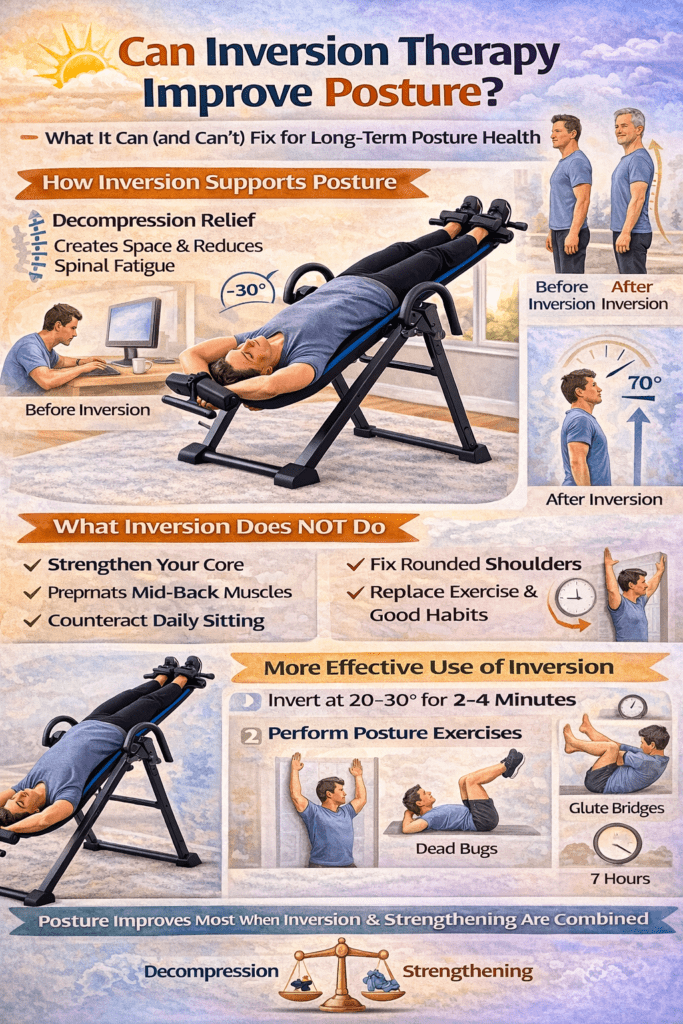
Inversion can support better posture — but it won’t correct it by itself.
It’s a tool. A helpful one. But posture is ultimately about strength, awareness, and habits. Let’s unpack how inversion fits into the bigger picture.
Why Posture Breaks Down in the First Place
Posture problems usually come from a combination of:
- Prolonged sitting
- Weak core and upper back muscles
- Tight hip flexors
- Rounded shoulders
- Forward head positioning
- Fatigue
Over time, gravity wins. We compress downward. The spine stiffens. Muscles adapt to shortened positions. That’s where inversion therapy can play a role — but it’s only part of the solution.
How Inversion Therapy Might Help Posture
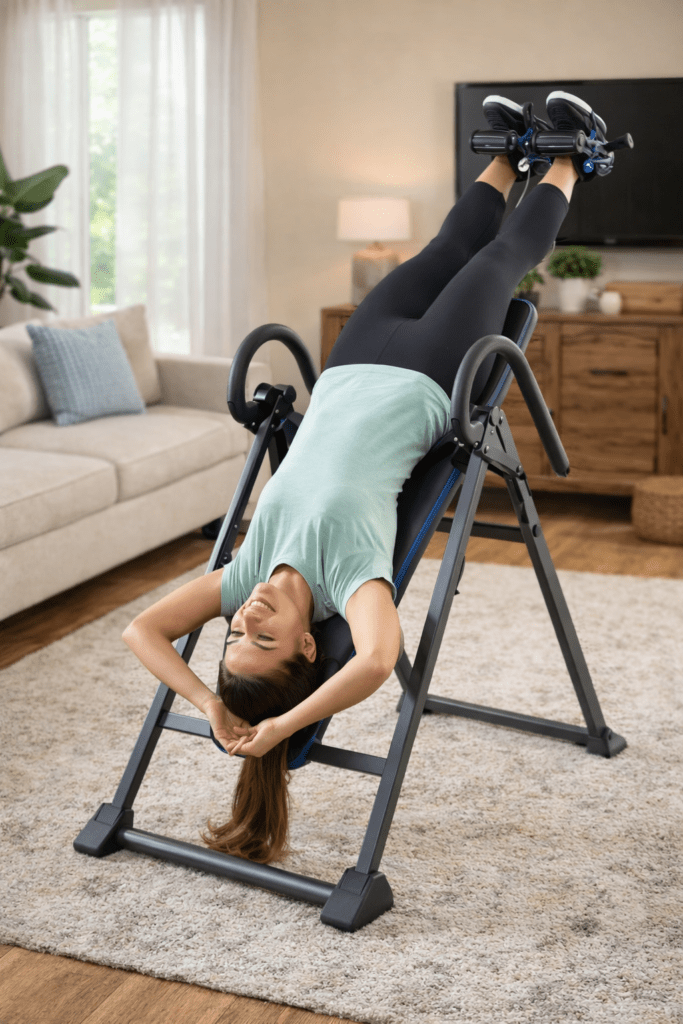
When you invert (even partially at 20–45 degrees), several things happen:
- Spinal discs temporarily decompress
- Paraspinal muscles relax
- The spine experiences gentle traction
- You reduce compression built up from sitting
Many people report feeling “taller” or lighter after inversion. That sensation isn’t imaginary — temporary decompression can create space between vertebrae and reduce pressure.
If you’ve reviewed general inversion benefits here:
https://www.inversionexpert.com/inversion-table-benefits/
you’ve likely seen how decompression helps reduce tension. But here’s the key point:
Feeling decompressed is not the same as retraining posture.
What Inversion Can Do for Posture
1. Reduce Compression Fatigue
When your spine is less compressed, it’s easier to stand upright without strain.
2. Improve Mobility Before Strength Work
Using inversion before posture exercises can make extension movements easier.
3. Increase Body Awareness
Many users report that after inversion, they become more conscious of alignment.
4. Counteract Daily Sitting
If you sit 6–10 hours per day, evening inversion can partially offset compression.
What Inversion Cannot Do
This is where expectations need to be realistic.
Inversion does not:
- Strengthen your core
- Strengthen your mid-back
- Permanently correct rounded shoulders
- Fix muscular imbalances
- Retrain movement patterns
If you invert daily but continue slouching the rest of the day, nothing lasting changes. Posture is active, while inversion is passive. Passive tools support active change — they don’t replace it.

The Real Formula for Better Posture
Here’s what actually works long-term:
- Decompression (inversion can help here)
- Core endurance training
- Upper back strengthening
- Hip flexor mobility
- Daily posture awareness
Inversion makes the strengthening phase easier — because you’re working from a less compressed state.
Think of it like loosening a tight jar lid before twisting it open.
Morning vs Evening for Posture Support
If posture is your goal:
Morning Inversion
- Helps you start upright
- Reduces stiffness before sitting
- Reinforces awareness early
Evening Inversion
- Offsets accumulated compression
- Prepares you for recovery
I personally recommend light inversion (20–30 degrees) for 2–4 minutes either before a posture workout or after long sitting sessions.
You can explore stable, angle-controlled options like:
https://www.inversionexpert.com/innova-fitness-itx9600-good-or-bad/
or comfort-focused models:
https://www.inversionexpert.com/innova-itm5900/
Angle control matters. You don’t need full vertical inversion for posture benefits.
Risks and Trade-Offs
We can’t talk about inversion without acknowledging physiological changes.
Inversion temporarily:
- Raises blood pressure
- Increases eye pressure
- Shifts circulation to the upper body
- May cause dizziness
People with:
- Hypertension
- Glaucoma
- Heart conditions
- Vertigo
- Certain eye issues
should consult a healthcare provider before using inversion. Posture improvement is not worth risking cardiovascular complications.
Also, deeper angles don’t equal better posture correction. In fact, aggressive inversion may increase head pressure without improving postural outcomes. Mild angles are usually sufficient.
Realistic Expectations
Here’s what you can reasonably expect:
After a few sessions:
- You may feel looser
- You’ll stand straighter temporarily
- Back fatigue may be reduced
After several weeks (if paired with strengthening):
- Improved endurance in upright posture
- Reduced slouching tendency
- Less daily compression discomfort
But if inversion is used alone? You’ll likely experience short-term relief — not structural change.
A Simple Posture Routine Using Inversion
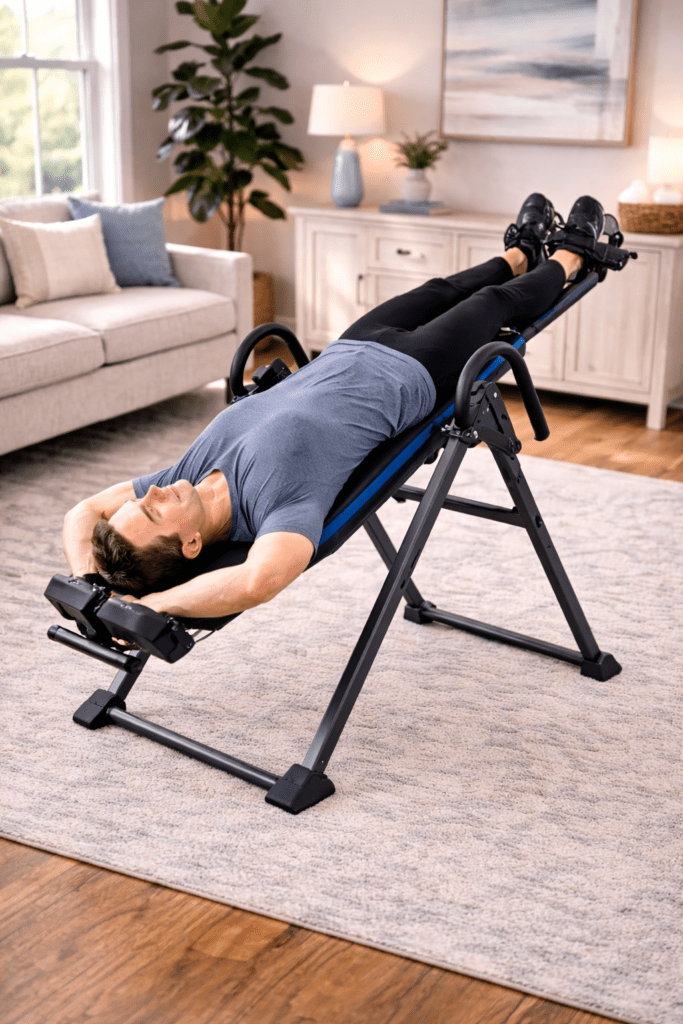
If posture is your goal, try this:
- Invert at 20–30 degrees for 2–3 minutes
- Slowly return upright
- Perform:
- Wall slides
- Dead bugs
- Glute bridges
- Thoracic extensions
- Focus on upright alignment during the day
That combination delivers better results than inversion alone.
Frequently Asked Questions
Can inversion permanently fix bad posture?
No, it temporarily reduces compression but doesn’t retrain muscles.
How long should I invert for posture support?
2–5 minutes at mild angles is usually enough.
Is full inversion necessary?
No, 20–45 degrees provides decompression without extreme pressure shifts.
How quickly will I see posture improvement?
You may feel immediate temporary improvement. Lasting changes usually require 4–8 weeks of strengthening plus decompression.
Can inversion help forward head posture?
Indirectly – it reduces spinal compression but won’t correct neck muscle imbalance without targeted exercises.
Reputable Resources for More Information
- Cleveland Clinic – Inversion therapy safety overview
- WebMD – Spinal traction and decompression guidance
- American Academy of Orthopaedic Surgeons – Posture and spine health basics
- Mayo Clinic – Back pain and posture management
Conclusion: Support, Not Solution
So, can inversion therapy improve posture?
Yes — as part of a broader plan.
It helps by:
- Reducing spinal compression
- Relaxing tight tissues
- Making strengthening more effective
But posture ultimately improves through strength and habit. Use inversion to create space, and movement to create change.