
If you’re dealing with back pain and researching decompression options, you’ve probably landed on two main categories: inversion tables and traction devices.
On the surface, they seem similar. Either device aims to stretch the spine and reduce pressure. Both promise relief. Plus, both use the word “decompression.” However, they are not the same experience. Plus, they are definitely not right for the same person.
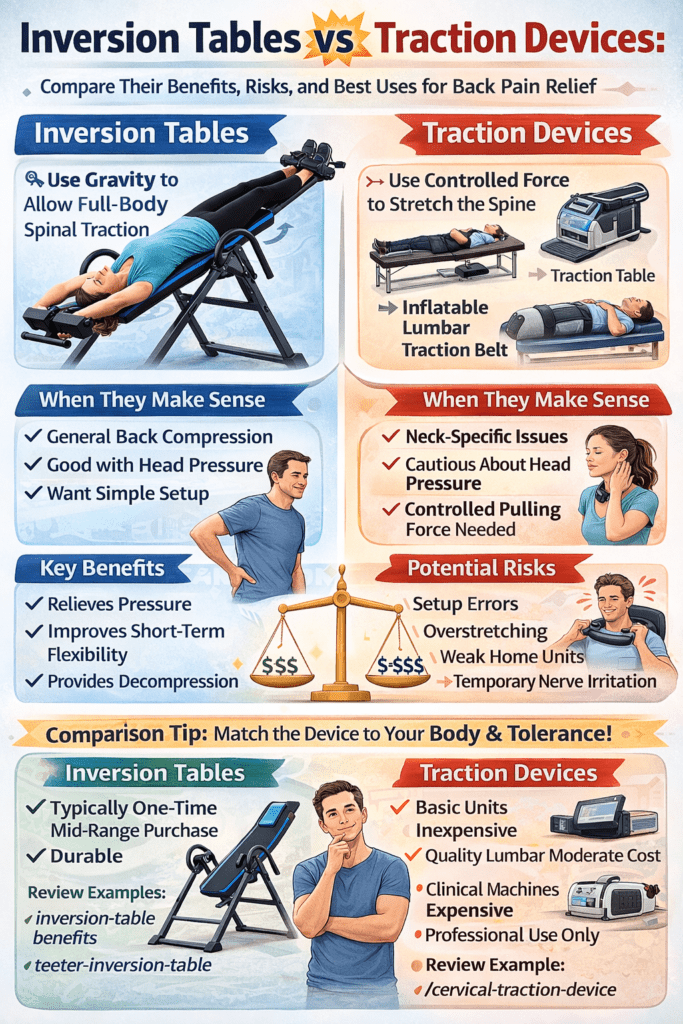
I’ve worked with both methods, and the biggest mistake people make is assuming one is automatically better. The real answer depends on your condition, tolerance, and goals.
Let’s break it down clearly.
The Core Difference
Inversion Tables
Use gravity. You secure your ankles and tilt backward, allowing your body weight to create spinal traction.
Examples reviewed in depth:
- https://www.inversionexpert.com/teeter-inversion-table/
- https://www.inversionexpert.com/innova-itm5900/
Traction Devices
Use mechanical or pneumatic force. These can include:
- Over-the-door cervical traction kits
- Inflatable lumbar traction belts
- Clinical motorized traction machines
- Table-based traction systems used in physical therapy
Instead of flipping you upside down, traction devices apply controlled pulling force — usually while you stay upright or lying flat.
How Inversion Tables Work
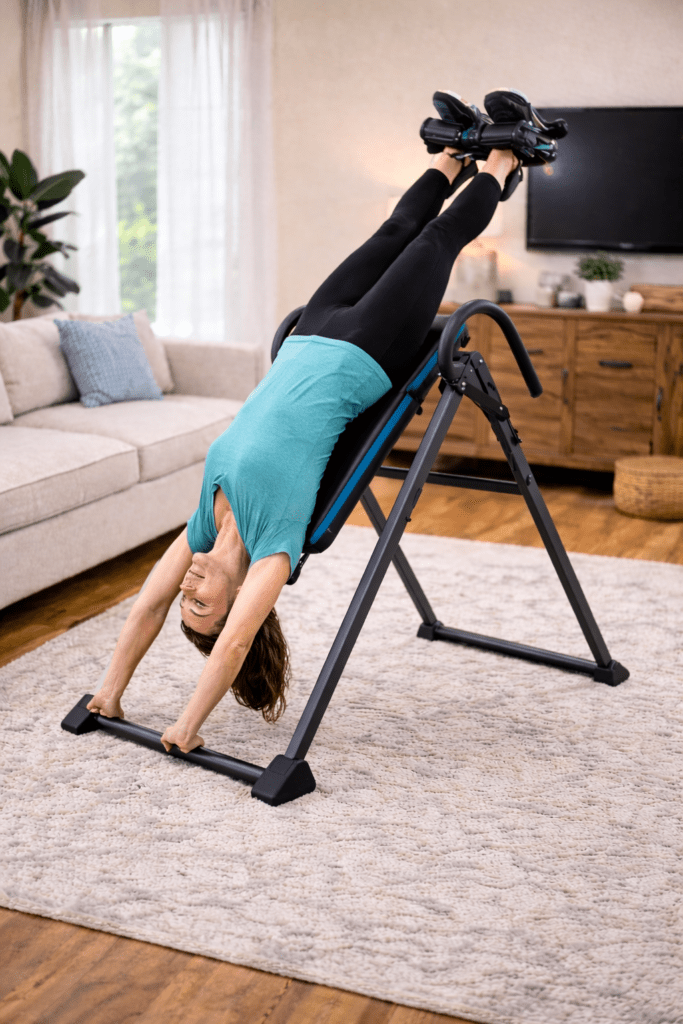
Inversion relies on gravity. When you tilt backward:
- Vertebral spaces may slightly widen
- Muscles relax under stretch
- Disc pressure may temporarily decrease
The sensation is full-body. You feel decompression from ankles to neck.
What I like about inversion:
- Simple mechanism (gravity doesn’t break)
- No motors or pumps
- Adjustable angle control
- Strong short-term relief for many users
But here’s the trade-off: inversion shifts blood toward your head. That means:
- Increased head pressure
- Temporary rise in blood pressure
- Not ideal for glaucoma, heart conditions, or hypertension
That’s why I always recommend reading through safety breakdowns like:
Inversion is powerful — but not subtle.
How Traction Devices Work
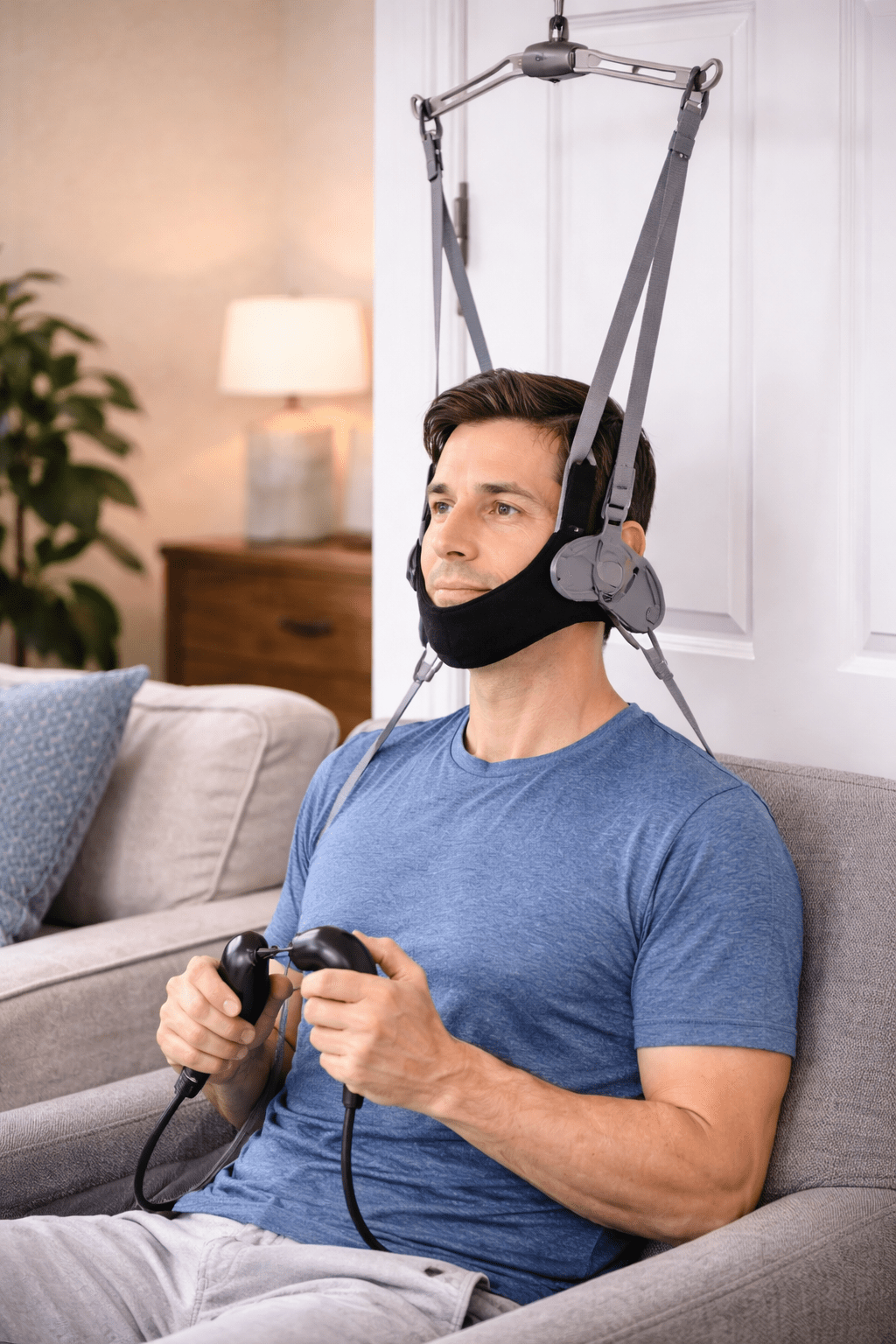
Traction devices apply targeted pulling force to a specific spinal region. For example:
- Lumbar traction belts inflate around your waist and gently stretch your lower spine.
- Cervical traction devices stretch your neck while you sit or lie down.
Clinical traction tables use motorized systems to deliver precise pounds of force.
What I like about traction devices:
- Targeted application (neck vs lower back)
- Controlled force levels
- Less head-pressure risk
- Often better tolerated by people sensitive to inversion
But they have downsides:
- Many home units are underpowered
- Over-the-door neck systems can feel awkward
- Clinical machines are expensive
- Results are often temporary unless paired with rehab
Traction is more precise — but sometimes less dramatic.
Which One Is More Effective?
Here’s the honest answer: both primarily offer temporary decompression relief.
Neither fixes structural issues permanently. They don’t replace strengthening and mobility work either. In addition, neither is a magic cure for herniated discs.
Research on spinal traction shows mixed evidence for long-term outcomes. Short-term symptom relief is more consistent.
The bigger question is: which one fits your body and tolerance?
When Inversion Tables Make More Sense
Inversion may be better if you:
- Have general lumbar compression pain
- Respond well to full-body stretch
- Want a simple at-home setup
- Prefer passive decompression
- Tolerate head pressure well
Many people with non-complicated lower back tightness feel immediate relief using mild angles (20–45 degrees). For beginners, I usually suggest reviewing:
It allows controlled angles without jumping straight to vertical.
When Traction Devices Make More Sense
Traction may be better if you:
- Have neck-specific issues
- Cannot tolerate head pressure
- Have high blood pressure
- Want very controlled force levels
- Your doctor recommended specific pound settings
People with cervical radiculopathy often do better with targeted neck traction rather than full inversion. If someone gets headaches easily from inversion, traction may be the safer path.
Risks and Trade-Offs
Inversion Risks
- Head pressure
- Increased eye pressure
- Blood pressure spikes
- Dizziness when returning upright
- Not safe for certain medical conditions
Traction Risks
- Incorrect setup causing muscle strain
- Overstretching
- Temporary nerve irritation
- Weak home units that don’t deliver meaningful force
Both require caution and should be used gradually.
Realistic Expectations
Neither inversion nor traction:
- “Realigns” your spine permanently
- Heals discs
- Eliminates arthritis
They can:
- Reduce compression temporarily
- Relax muscles
- Improve flexibility short-term
- Provide a window for exercise to work better
Think of decompression as creating breathing room — not permanent repair.
The long-term change comes from:
- Core strengthening
- Hip mobility
- Postural correction
- Load management
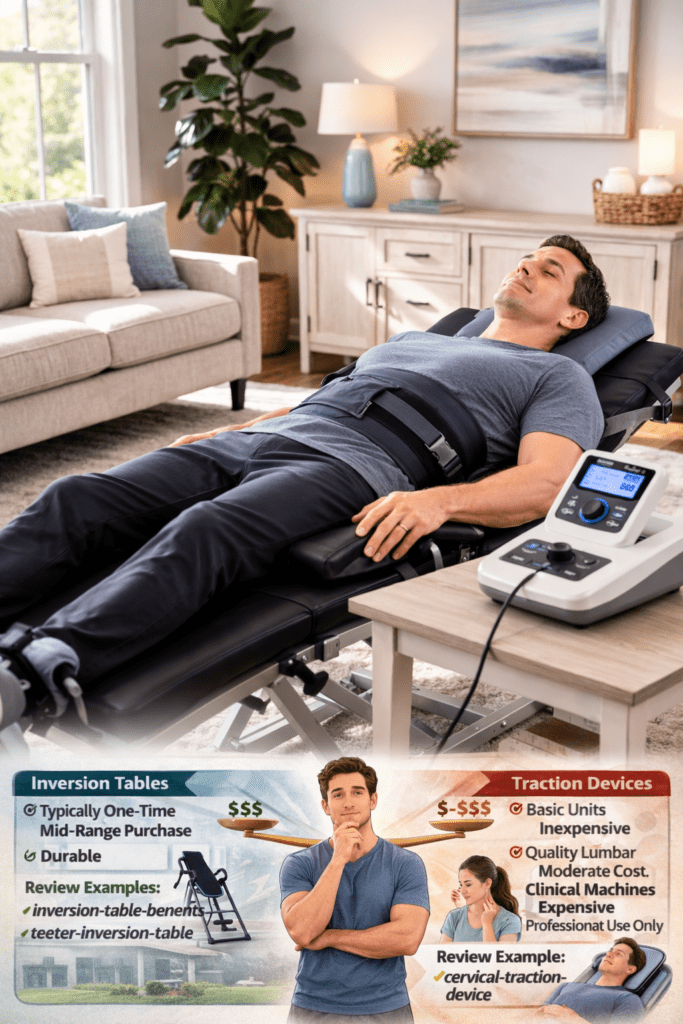
Cost Comparison
Inversion tables:
- Typically mid-range one-time purchase
- Durable
- Low maintenance
Traction devices:
- Basic home kits: inexpensive
- Quality lumbar devices: moderate cost
- Clinical traction tables: expensive and professional-use only
If you want long-term at-home decompression, inversion often offers more value per dollar.
Frequently Asked Questions
Is inversion stronger than traction?
Usually yes, because gravity applies your full body weight. Traction devices allow more precise but often lighter force.
Can I use both?
Some people alternate — mild inversion on some days, targeted traction on others.
Which is safer?
Depends on your health profile. People with blood pressure or eye issues often tolerate traction better.
Does either fix herniated discs?
No, both may reduce pressure temporarily but don’t reverse disc damage.
Is full inversion necessary?
No – many benefits occur at partial angles (20–45 degrees).
Reputable Resources for More Information
- Cleveland Clinic – Inversion therapy overview and risks
- WebMD – Spinal traction and decompression safety
- American Physical Therapy Association – Guidelines on mechanical traction
- Mayo Clinic – Back pain management approaches
Conclusion: It’s Not About Which Wins
It’s about which fits you.
If you want strong, full-body decompression and tolerate head pressure well, inversion tables often deliver more noticeable relief. On the other hand, if you need targeted, controlled, lower-risk decompression — especially for the neck — traction devices may be smarter.
- Neither replaces movement.
- Neither replaces rehab.
- Both are tools.
The best outcome happens when decompression supports strengthening — not substitutes for it.