
If you’ve ever come up from an inversion session feeling pressure in your head or a dull throbbing behind your eyes, you’re not imagining it. Yes — inversion tables can cause headaches in some people.
I’ve worked with inversion therapy long enough to tell you this: inversion is powerful. And anything powerful comes with trade-offs. For some people, it’s a game-changer for back relief. For others, it can trigger uncomfortable symptoms — including headaches, eye pressure, or dizziness.
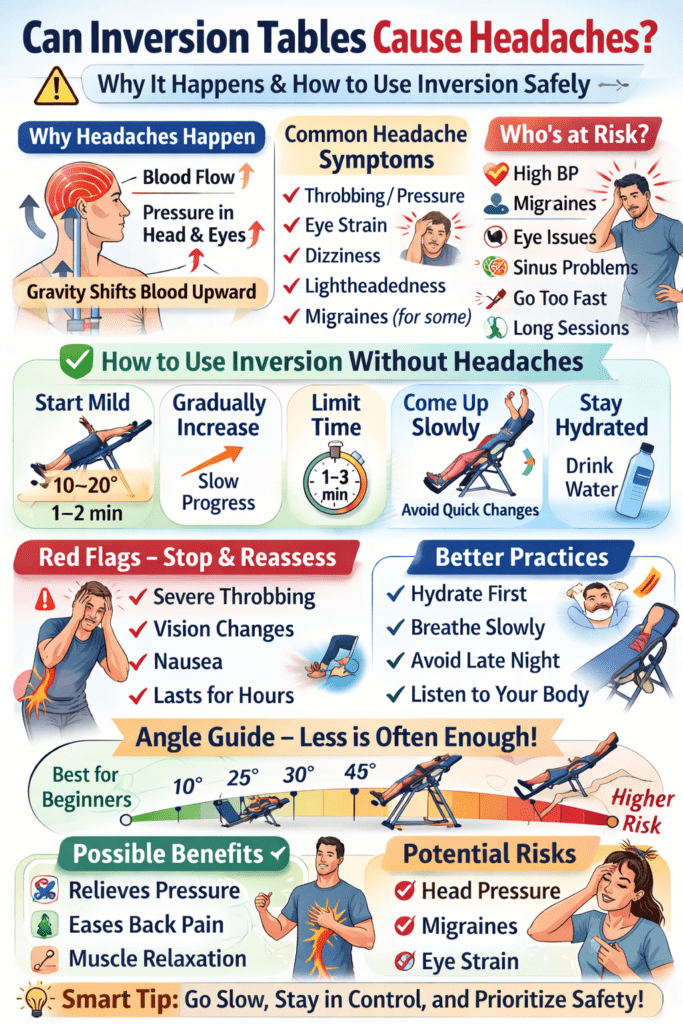
The key isn’t avoiding inversion completely. It’s understanding why headaches happen, who’s most at risk, and how to adjust your approach so you can decide whether inversion is right for you.
Let’s break it down in practical terms.
Why Inversion Can Trigger Headaches
When you invert, gravity shifts blood toward your head. That shift increases:
- Blood pressure in the upper body
- Pressure inside the skull
- Pressure inside the eyes
For some people, that pressure change is no big deal. For others, it’s enough to cause:
- A dull, full-head pressure headache
- Throbbing at the temples
- Eye strain or pressure behind the eyes
- Lightheadedness when returning upright
This isn’t random. It’s physiology.
If you already tend to get tension headaches, migraines, or sinus pressure, inversion can amplify those tendencies — especially at steep angles.
Who Is Most Likely to Get Headaches From Inversion?
Not everyone reacts the same way. In my experience, headaches are more common in people who:
- Have high blood pressure
- Are prone to migraines
- Have glaucoma or eye pressure issues
- Have sinus congestion or chronic sinusitis
- Jump straight to full inversion too quickly
- Stay inverted too long in early sessions
If any of those apply to you, inversion doesn’t automatically mean “no.” But it does mean you need to be cautious and possibly get medical clearance first.
This is something I emphasize often when reviewing tables like the Innova ITX9600 or ITM5900 — comfort and control matter because they allow gradual progression instead of extreme angles right away:
- https://www.inversionexpert.com/innova-fitness-itx9600-good-or-bad/
- https://www.inversionexpert.com/innova-itm5900/
Angle control is more important than most people realize.
How Steep Angles Make It Worse
Here’s where people mess up. They think: “If 20 degrees feels good, 90 degrees must be better.” Wrong.
Headaches are far more common when people:
- Go fully upside down immediately
- Stay inverted 5–10+ minutes without building tolerance
- Lock into a steep angle without easing into it
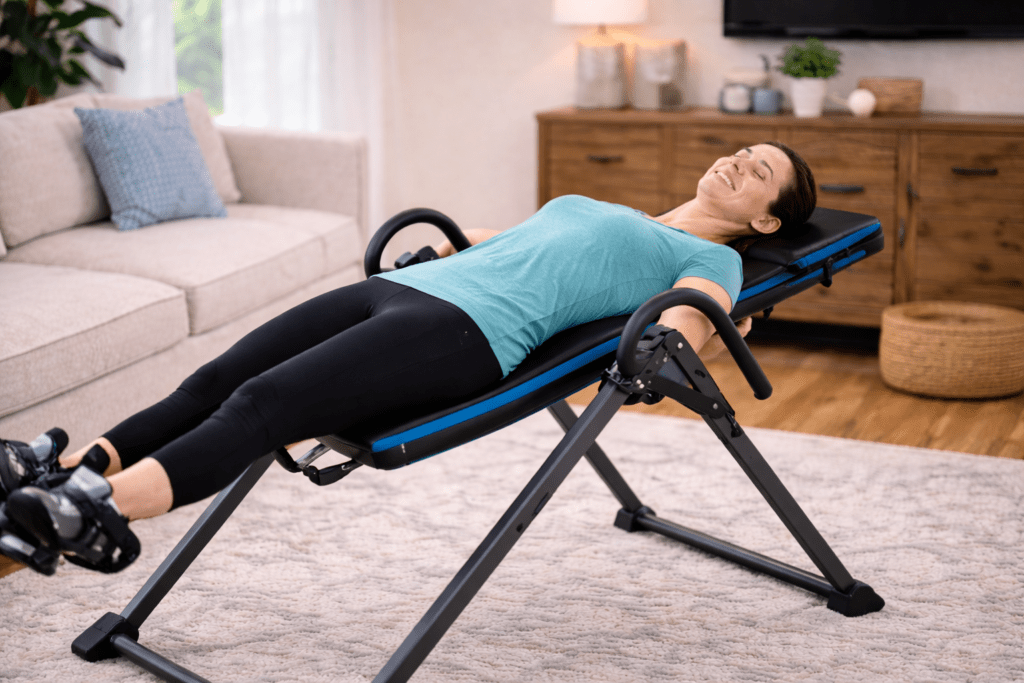
For headache-prone users, I recommend:
- Start at 10–20 degrees
- Stay there for 1–2 minutes
- Come up slowly
- Wait and assess how you feel before repeating
In many cases, mild inversion provides decompression benefits without triggering head pressure.
Can Inversion Cause Migraines?
If you’re migraine-prone, inversion can be tricky.
The increased blood flow and pressure shift can act as a trigger. Some migraine sufferers report no issues. Others find even mild inversion sets one off within hours.
There’s no universal rule — which is why I never recommend inversion as a migraine solution unless approved by a healthcare provider.
If headaches worsen after sessions or appear repeatedly, that’s your signal to reassess.
Temporary Pressure vs. True Headache
It’s important to distinguish between:
Normal pressure sensation:
- Mild fullness in the head
- Slight facial flushing
- Brief lightheadedness when returning upright
Red flag headache:
- Sharp or throbbing pain
- Visual disturbances
- Nausea
- Lingering headache lasting hours
Mild pressure is common. Severe or persistent headaches are not something you should push through.
Trade-Offs: Is It Worth It?
Inversion can absolutely relieve spinal compression and reduce back pain symptoms. But here’s the honest trade-off:
You’re using gravity to decompress your spine, which means gravity is also affecting circulation in your head.
If your back pain relief is dramatic and headaches are mild and brief, you may find the trade-off acceptable — especially if you adjust angle and time.
If headaches are frequent or severe, inversion may not be worth it for you.
That’s why I often suggest reviewing safer angle-control tables or models that allow partial inversion instead of full vertical hanging:
- https://www.inversionexpert.com/inversion-table-benefits/
- https://www.inversionexpert.com/teeter-inversion-table/
Better equipment doesn’t eliminate pressure shifts — but it does give you more control.
How to Reduce Headache Risk

If you want to try inversion without triggering headaches, here’s the smart approach:
1. Hydrate First
Dehydration increases headache likelihood. Drink water before sessions.
2. Start Mild
Stay at 10–20 degrees for your first week.
3. Limit Time
1–3 minutes is plenty for beginners.
4. Breathe Slowly
Holding your breath increases internal pressure. Slow nasal breathing helps regulate pressure.
5. Come Up Slowly
Fast transitions can cause head rush and pressure spikes.
6. Avoid Late-Night Sessions
Some people report head pressure interfering with sleep.
Small adjustments often solve the problem.
Realistic Expectations
Inversion is not supposed to feel like you’re hanging from a cliff.
Done properly, it should feel:
- Controlled
- Mildly decompressing
- Relaxing
If you feel intense cranial pressure, your body is telling you the angle or duration is too much.
Some people simply aren’t good candidates. And that’s okay.
The goal is spinal relief — not tolerating side effects.
Frequently Asked Questions
Do inversion tables permanently raise blood pressure?
No, the increase is temporary during inversion. However, if you have hypertension, that temporary spike can be risky. Always consult your doctor first.
How long should I invert to avoid headaches?
Start with 1–2 minutes at mild angles. Many users never need to exceed 3–5 minutes.
Why do my eyes feel pressure when inverted?
Inversion increases intraocular pressure temporarily. This is why people with glaucoma should avoid inversion unless medically cleared.
Can I build tolerance to inversion headaches?
Sometimes – gradual exposure at mild angles can help your body adapt. But persistent headaches are a sign to stop.
Is full inversion necessary for benefits?
No, many users experience relief at 20–45 degrees. Full vertical inversion is optional, not required.
Reputable Resources for More Information
- Cleveland Clinic (Inversion therapy and risks)
- WebMD (Inversion table safety guidance)
- American Academy of Ophthalmology (Eye pressure and inversion)
- Mayo Clinic (Headache triggers and blood pressure considerations)
Conclusion: Listen to Your Head — Literally
Yes, inversion tables can cause headaches. But they don’t have to.
Most problems happen because people:
- Go too steep too fast
- Stay inverted too long
- Ignore underlying conditions
If you approach inversion gradually, monitor your response, and use proper equipment with controlled angles, many people avoid headaches altogether.
But if your body pushes back consistently? Respect that.
Inversion is a tool — not a requirement for back health. The smartest users are the ones who adjust intelligently, not stubbornly.