
Let’s clear something up right away.
An inversion table is not some miracle machine that “fixes your spine.” It doesn’t magically realign discs or cure chronic back issues overnight. But when used correctly, it can be a powerful mechanical tool that leverages gravity to decompress the spine and reduce pressure.
If you’ve ever wondered what’s actually happening when someone hangs upside down on one of these things, I’m going to break it down in plain English — no fluff, no hype.
What Does an Inversion Table Actually Do?
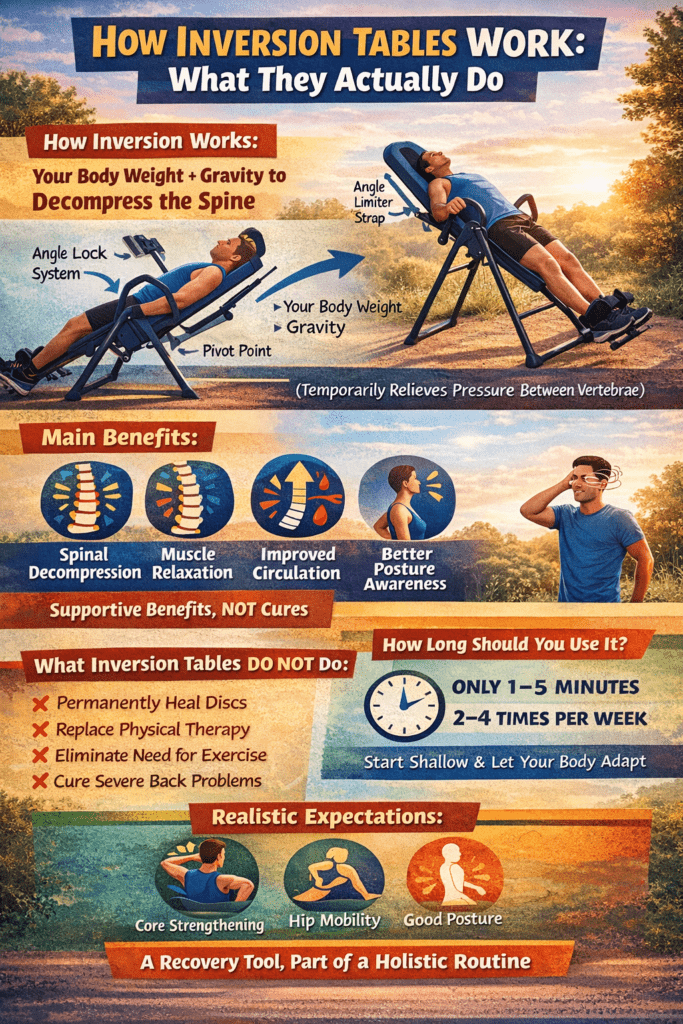
At its core, an inversion table uses your body weight and gravity to create traction on your spine.
When you tilt backward:
- Your body weight pulls downward.
- The spine experiences gentle separation.
- Pressure between vertebrae decreases.
- Muscles surrounding the spine relax.
That’s it. No motors stretching you. No mechanical pulling (unless you’re using a motorized model, which works differently — more on that later).
It’s gravity doing what gravity does.
What’s Happening Inside Your Spine?
Think about your spine like a stack of cushions (discs) between blocks (vertebrae). When you sit, stand, or run all day, those cushions compress slightly.
That compression can:
- Irritate nerves
- Cause stiffness
- Contribute to lower back tightness
- Increase disc pressure
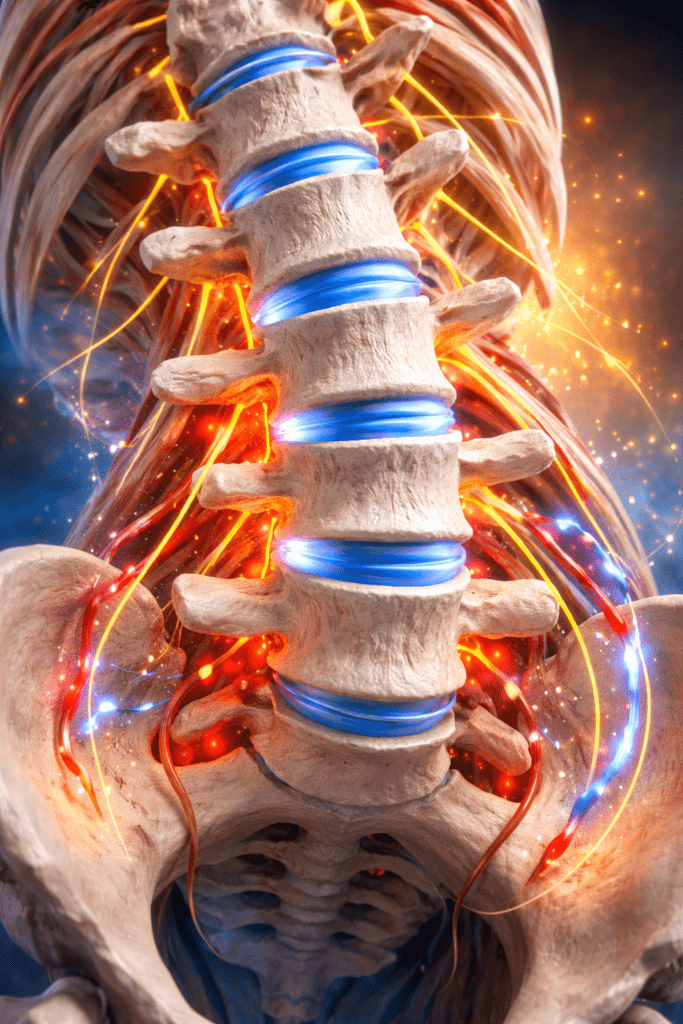
When you invert, you temporarily reverse that compression.
This can:
- Increase space between vertebrae
- Reduce nerve pressure
- Improve circulation to spinal structures
- Trigger muscle relaxation
Important word there: temporarily.
Inversion doesn’t permanently stretch your spine. It provides temporary decompression that often feels relieving.
How Do Inversion Tables Physically Work?
Mechanically, most inversion tables include:
- A rotating pivot system
- Ankle locking mechanism
- Adjustable height settings
- Angle limiter safety strap
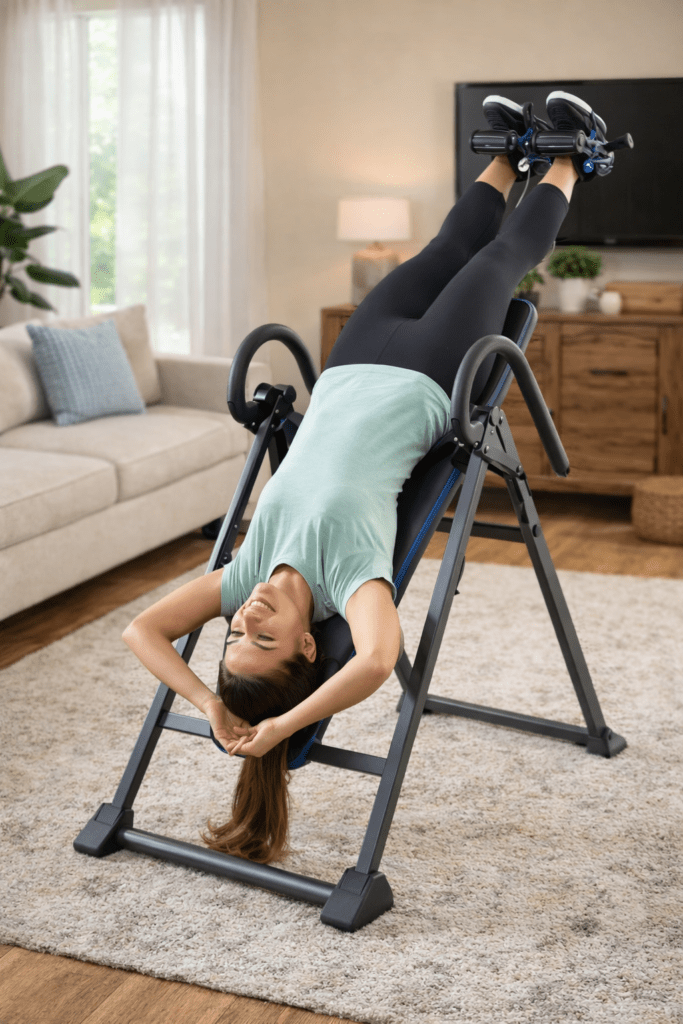
You lie flat.
Secure your ankles.
Use your body weight to rotate backward.
The pivot point is near your center of gravity, so even small arm movements can control how far you invert.
This is why beginners don’t need to go fully upside down. Even a 20–30 degree tilt provides traction.
If you’re trying to decide between equipment styles, I recommend reading motorized vs manual inversion tables. Most people overestimate how complex they need the machine to be.
The Main Benefits People Feel
Here’s what users typically notice:
1. Spinal Decompression
This is the primary benefit. Many people feel immediate relief in the lower back after 1–3 minutes.
2. Muscle Relaxation
When spinal pressure decreases, surrounding muscles often relax. This can reduce that “tight band” feeling across the lumbar area.
3. Improved Circulation
Being inverted shifts blood flow. This can give a refreshed feeling, especially in the legs.
4. Posture Awareness
Some users report improved posture simply because they become more aware of spinal alignment.
But again — these are supportive benefits, not cures.
What Inversion Tables Do NOT Do
Let’s stay realistic.
They do not:
- Heal herniated discs permanently
- Replace physical therapy
- Fix structural degeneration
- Eliminate the need for exercise
- Strengthen your core
If your back pain is caused by weakness, poor posture habits, or lack of movement, inversion is not the main solution. It’s a tool — not a replacement for foundational health habits.
Trade-Offs and Risks
This part matters.
Inversion increases blood pressure in the upper body and head temporarily. That means it’s not recommended for people with:
- Uncontrolled high blood pressure
- Glaucoma
- Heart disease
- Recent stroke history
- Retinal issues
- Abdominal hernias
You should always clear it with a healthcare provider if you have medical conditions.
There’s also a learning curve. If you rush into full inversion, you might feel:
- Dizziness
- Head pressure
- Sinus congestion
- Mild headache
Start shallow. Let your body adapt.
The page on inversion therapy safety tips and risks covers this in more detail.
Who Benefits Most?
In my experience, inversion works best for:
- People who sit all day
- Runners and lifters dealing with spinal compression
- Individuals with mild to moderate mechanical back pain
- People who respond well to traction therapy
It’s less helpful for:
- Severe structural spinal conditions
- People who expect dramatic transformation
- Anyone unwilling to use it consistently
Consistency matters more than intensity.
How Long Should You Use It?
Most people only need:
- 1–5 minutes
- 2–4 times per week
More is not better. Your spine responds to gentle traction – overdoing it can actually irritate sensitive tissues.
Frequently Asked Questions
Do inversion tables realign your spine?
They temporarily decompress the spine. They do not permanently realign vertebrae.
Is full inversion necessary?
No. Even 20–45 degrees provides traction benefits.
How quickly will I feel results?
Many people feel relief within minutes, but long-term benefits depend on consistent use.
Can inversion help with sciatica?
If sciatica is caused by compression, some people experience relief. If it’s caused by severe structural damage, results may be limited.
Are motorized tables better?
Not necessarily. Manual tables work extremely well for most healthy adults. Motorized versions are helpful for those with limited mobility.
Realistic Expectations
If you buy an inversion table expecting:
- Instant cure
- Permanent disc healing
- Massive flexibility gains
You’ll be disappointed.
If you use it as:
- A recovery tool
- A decompression aid
- A supplement to strength and mobility work
You’ll likely be satisfied.
Inversion works best when combined with:
- Core strengthening
- Hip mobility work
- Good posture habits
- Smart lifting technique
It’s a supportive strategy — not a standalone fix.
Reputable Resources
For evidence-based information:
- Mayo Clinic – Inversion Therapy Overview
- Cleveland Clinic – Back Pain Causes and Treatments
- National Institute of Neurological Disorders and Stroke (NINDS)
These provide balanced medical perspectives on spinal health and traction.
Final Thoughts
An inversion table is a simple mechanical device that uses gravity to decompress your spine. That’s the science behind it.
It’s not flashy or futuristic. But when used properly, it can provide noticeable relief for the right person. If you deal with spinal compression from sitting, training, or daily stress — and you understand its limits — it can absolutely be worth adding to your recovery routine.
Just don’t skip the fundamentals. Strong core. Good movement. Smart habits. Inversion supports the work — it doesn’t replace it.